
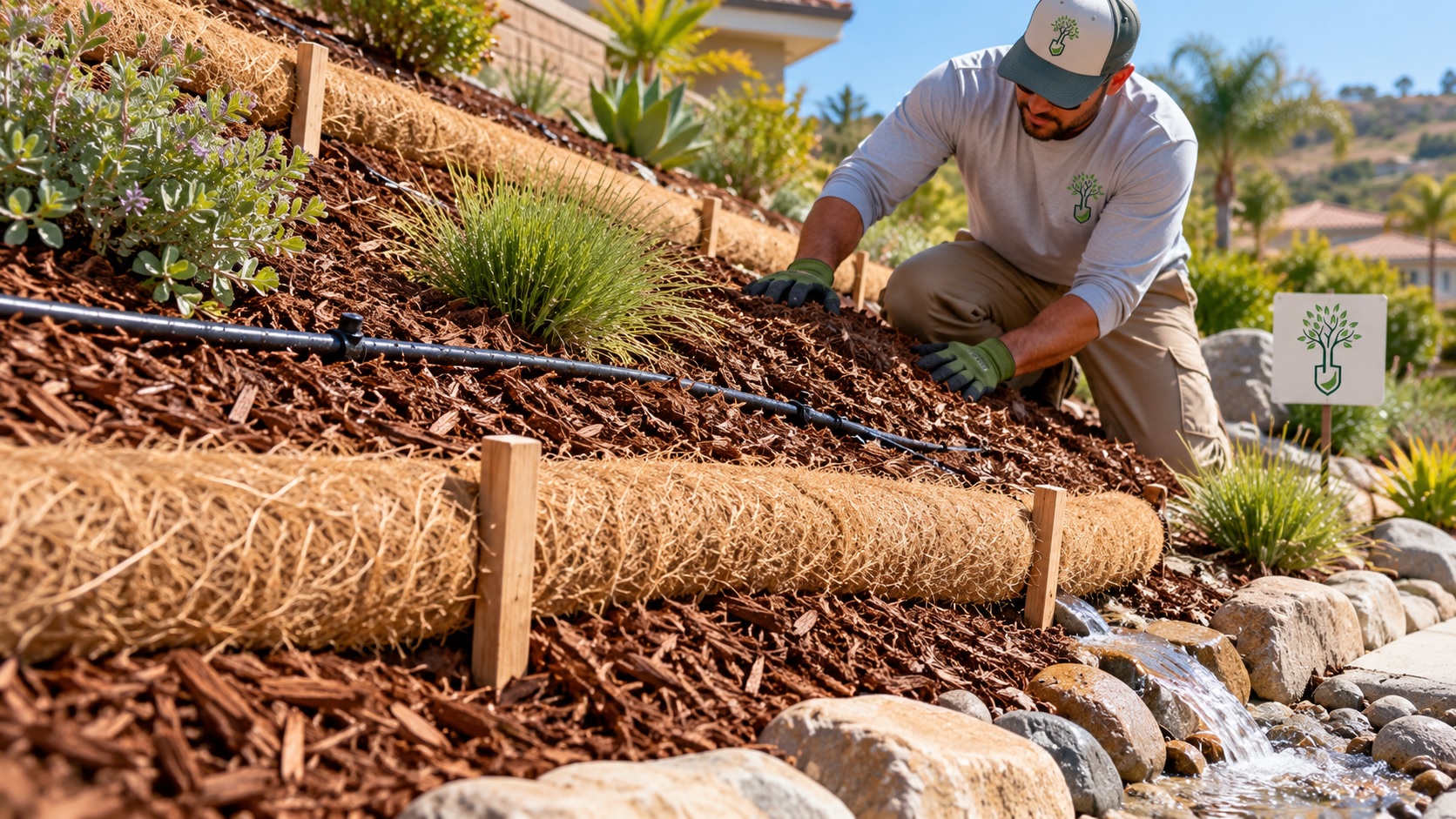
The best way to keep mulch from washing away on a slope is to use fibrous shredded bark, apply an even 2 to 3-inch layer, control concentrated runoff, and install erosion barriers where necessary. Gorilla Hair Mulch is a practical choice for many San Diego hillsides because its long fibers interlock and resist movement better than loose bark nuggets. Proper drainage, contour edging, and deep-rooted plants provide additional protection during heavy rainfall.
Why Does Mulch Wash Away on Slopes?
Mulch helps protect soil, retain moisture, and improve landscape appearance. However, sloped yards create a challenge because water naturally moves downhill.
During heavy rain, runoff can carry loose mulch into sidewalks, driveways, storm drains, and lower garden beds.
At North County Mulch, we help homeowners and landscaping contractors throughout San Diego County select materials for challenging landscapes.
Common causes of mulch erosion include:
- Heavy rainfall and fast-moving runoff
- Steep or lengthy slopes
- Large, lightweight bark nuggets
- Compacted soil that prevents water absorption
- Sprinklers directing water downhill
- Poorly prepared planting beds
The solution involves choosing suitable hillside mulch and controlling the water that causes material movement.
1. Choose the Best Mulch for Slopes
Not all mulch materials perform equally on hillsides.
Large bark nuggets and loose wood chips may roll or float downhill during storms.
Finely shredded bark performs differently because individual strands overlap and form a more connected surface.
Why Gorilla Hair Mulch Works on Hillsides
Our Gorilla Hair Mulch consists of long, fibrous pieces of shredded redwood or cedar bark.
Its interlocking texture helps the material stay together, making it a practical option for many sloped landscape beds.
| Mulch Type | Performance on Slopes |
|---|---|
| Gorilla Hair Mulch | Interlocking fibers resist movement |
| Shredded wood mulch | Generally better retention than loose nuggets |
| Large bark nuggets | More likely to roll or float |
| Loose wood chips | Better suited to gentle slopes |
| Gravel or rock | Useful in designed drainage areas; may shift on steep slopes |
Even fibrous mulch can wash away when runoff becomes concentrated or the slope is unstable.
2. Prepare the Hillside Before Applying Mulch
Proper surface preparation helps mulch settle against the soil.
We recommend removing weeds, accumulated debris, and loose materials before installation.
Lightly roughen smooth, compacted soil where appropriate to create surface texture.
Avoid excessive tilling on steep slopes because disturbing the soil may increase erosion.
We also recommend identifying existing runoff channels before spreading material. Covering an active drainage path with mulch rarely solves the underlying problem.
3. Apply Mulch at the Correct Depth
Too little mulch leaves soil exposed to rainfall.
However, excessively thick applications can create loose, unstable piles that move downhill.
For many suitable slopes, we recommend:
- Applying approximately 2 to 3 inches of shredded mulch
- Distributing material evenly across the hillside
- Keeping mulch away from tree trunks and plant crowns
- Avoiding deep piles near retaining walls or drainage outlets
The goal is consistent coverage rather than building an unnecessarily thick layer.
4. Install Landscape Edging and Erosion Barriers
Physical barriers can help prevent hillside mulch from moving downhill.
Depending on slope conditions, useful options include:
Landscape Edging: Properly anchored edging can contain mulch along planting-bed borders.
Fiber Rolls: Straw or coconut-fiber wattles installed across the slope can interrupt shallow runoff.
Contour Barriers: Suitable logs, low landscape borders, or other approved features can help divide long slopes into smaller sections.
According to Caltrans erosion-control guidance, fiber rolls and erosion-control blankets can reduce runoff velocity and help limit soil movement.
These materials must be correctly installed and secured to remain effective.
5. Control Water Before It Reaches the Mulch
One of the most effective ways to prevent mulch erosion is to manage where water flows.
We recommend inspecting downspouts, sprinkler systems, and existing drainage channels.
Possible improvements include:
- Redirecting roof runoff to approved drainage outlets
- Using properly designed swales
- Installing rock-lined drainage channels where appropriate
- Preventing water from concentrating in planting beds
Avoid directing stormwater onto neighboring properties or unstable hillsides.
When water moves rapidly through a slope, drainage improvements may be more important than changing mulch products.
6. Use Drip Irrigation and Hillside Plants
Sprinklers can unintentionally wash mulch downhill, particularly when spray hits bare soil or saturated ground.
Drip irrigation delivers water closer to plant roots and can reduce surface runoff when properly designed.
We also recommend establishing suitable groundcover, shrubs, and other plants with root systems that help stabilize the soil.
For San Diego landscapes, drought-tolerant and regionally appropriate plants can provide long-term coverage while reducing irrigation needs.
Wildfire safety matters: CAL FIRE recommends noncombustible materials such as gravel or stone within five feet of homes and structures. Use organic hillside mulch only where appropriate under applicable defensible-space guidance.
7. Inspect and Maintain Mulch After Heavy Rain
Even properly installed hillside mulch requires occasional maintenance.
After a significant storm, check for exposed soil, displaced mulch, blocked drains, and developing runoff channels.
Rake small displaced areas back into place only after addressing the source of the runoff.
Replace material where coverage has become too thin.
For more information about managing unstable hillsides, read our related article, How to Prevent Soil Erosion on North County Properties Before the Rain Hits.
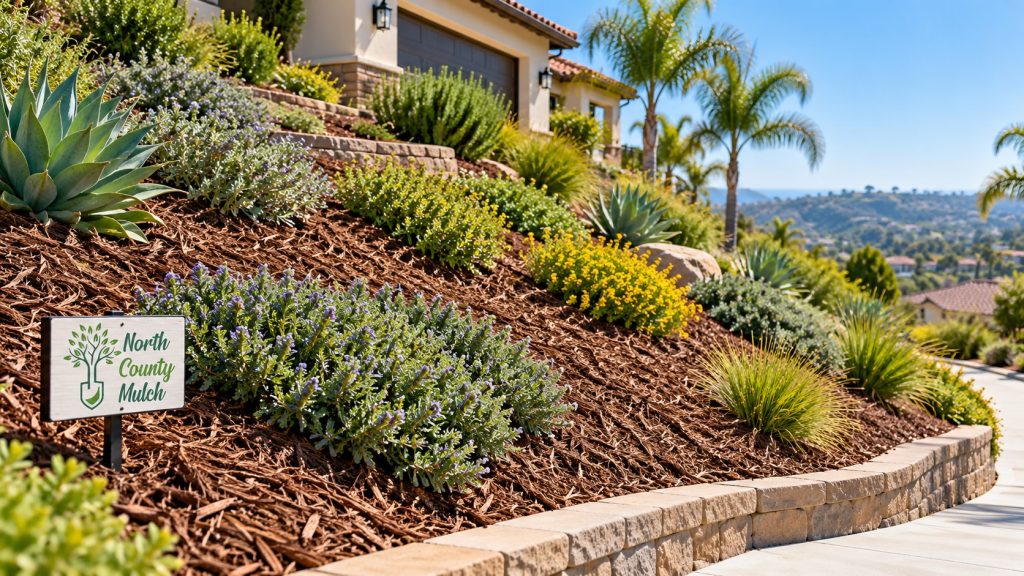
When Mulch Alone Cannot Prevent Erosion
Mulch provides surface protection, but it cannot stabilize every slope.
Deep gullies, sliding soil, large cracks, leaning retaining walls, or exposed underground utilities may indicate a more serious problem.
These conditions may require professional drainage design, erosion-control systems, or engineered slope stabilization.
We recommend evaluating these problems before adding more mulch.
Frequently Asked Questions
What mulch stays in place best on a slope?
Fibrous shredded bark, including Gorilla Hair Mulch, generally stays in place better than loose bark nuggets because its strands interlock.
How deep should hillside mulch be?
Approximately 2 to 3 inches is suitable for many landscape beds and manageable slopes. Actual requirements depend on the material, site conditions, and fire-safety considerations.
Does landscape edging prevent mulch erosion?
Edging can help contain mulch at bed boundaries, but it does not replace proper drainage or erosion controls on steep slopes.
Can mulch prevent hillside soil erosion?
Mulch can reduce raindrop impact and shallow surface erosion. Severe erosion may also require plants, drainage improvements, blankets, or structural stabilization.
Keep Hillside Mulch in Place With North County Mulch
Learning how to keep mulch from washing away starts with choosing the right material and preparing the landscape correctly.
At North County Mulch, we supply Gorilla Hair Mulch, shredded mulch, gravel, and other landscape materials for homeowners and contractors throughout Escondido, Carlsbad, Oceanside, Poway, and surrounding San Diego County communities.
Our landscape material delivery services make preparing hillside projects easier.