
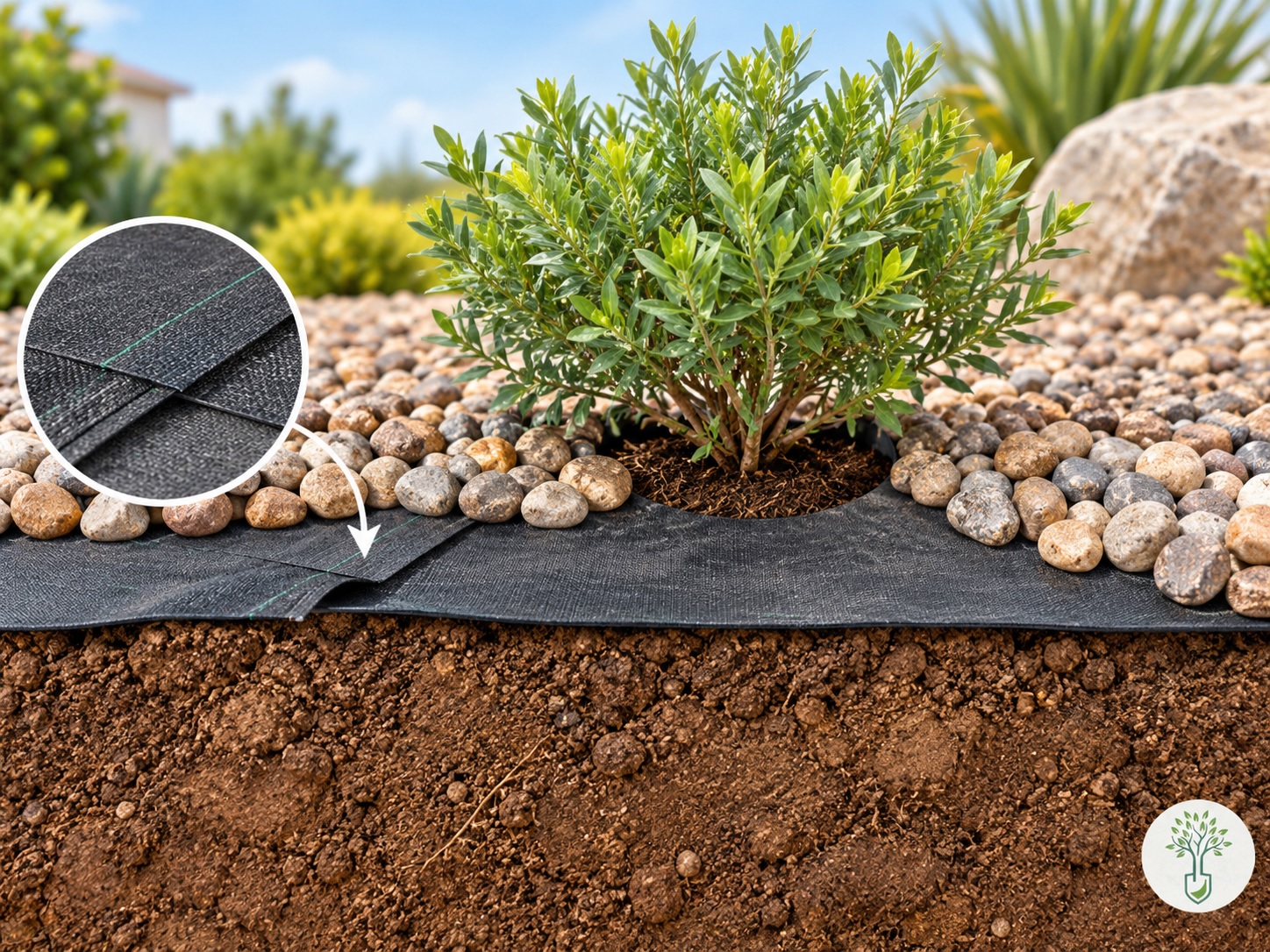
To stop weeds in gravel and landscape rock, we start by removing existing weeds and roots, preparing and grading the soil, installing permeable landscape fabric where appropriate, overlapping and securing the seams, and covering the surface completely with rock. Long-term weed control also requires keeping leaves, dust, soil, and grass clippings from accumulating between stones, where new weed seeds can germinate.
Landscape rock is a popular choice across Escondido and North County San Diego because it creates a clean, drought-conscious landscape with less ongoing maintenance than many planted areas. But rock alone does not permanently stop weeds.
Understanding where weeds come from helps us build rock landscapes that stay cleaner for longer.
Why Do Weeds Grow Through Landscape Rock?
Weeds appearing between rocks do not always grow upward from the native soil below.
There are two common sources.
The first is existing weed roots, rhizomes, or seeds left underneath the rock during installation. These can return through gaps in the barrier or around planting openings.
The second is new seed deposited on top of the rock. Wind, birds, runoff, grass clippings, and landscape debris can carry seeds into the area. Over time, leaves, dust, and soil collect between stones and create a thin growing medium.
That means many weeds in established rock landscapes actually germinate above the landscape fabric, not underneath it.
Remove Existing Weeds Before Adding Rock
Good weed control starts before the first load of rock arrives.
We recommend removing annual weeds, roots from aggressive perennial weeds, and loose plant debris before installing fabric or gravel. Simply covering a weed-filled area can leave underground roots with enough stored energy to grow back.
Clearing the site also gives us a smoother surface for grading and landscape fabric installation.
Should We Put Landscape Fabric Under Rock?
Yes, landscape fabric can be useful beneath permanent rock landscaping, especially around shrubs and other long-term plantings.
A permeable geotextile barrier can help:
- Separate landscape rock from native soil
- Reduce rock settling into the ground
- Limit soil movement into the rock layer
- Suppress many existing annual weeds
- Keep rock installations cleaner over time
However, landscape fabric is not a permanent weed-proof layer.
Seeds can still germinate in dust, soil, and decomposed organic matter that accumulates above the fabric. Tears, exposed edges, planting holes, and poorly overlapped seams can also become entry points.
How to Install Weed Barrier Under Landscape Rock
For a cleaner installation, we recommend following a simple process:
- Remove existing weeds and plant debris.
- Grade and smooth the native soil.
- Position shrubs and other plants.
- Lay permeable landscape fabric flat across the area.
- Overlap fabric seams so gaps are not exposed.
- Secure the material with landscape staples.
- Keep openings around plants as small as practical.
- Keep excavated soil off the top of the fabric.
- Cover the barrier completely with landscape rock.
Careful preparation matters because weeds can exploit open seams, exposed soil, and disturbed areas around plants.
How Deep Should Landscape Rock Be to Reduce Weeds?
There is no single rock depth that works for every landscape.
The right depth depends on rock size, shape, intended use, traffic, drainage, existing soil, slope, and whether landscape fabric is installed.
A decorative river rock bed, gravel pathway, and crushed-rock area can each require different installation approaches. Adding an excessively thick rock layer also does not guarantee permanent weed prevention.
When planning a new area, our landscape rock options can be matched to the appearance, drainage, traffic, slope, and maintenance needs of the project.
Why Weeds Still Grow on Top of Landscape Fabric
One of the most common frustrations we see is weeds appearing even though a weed barrier is already underneath the rock.
The reason is simple:
Leaves + dust + soil + moisture can create another seedbed.
Windblown seeds can settle into this material and germinate without ever reaching the original soil underneath.
Common contributors include grass clippings, decomposing leaves, bird activity, runoff, dust, and unnecessary irrigation.
The same principle applies to decomposed granite. Our guide to installing decomposed granite covers proper preparation and installation for DG walkways and patios.
How to Keep Rock Landscaping Weed-Free
Installation does most of the heavy lifting, but regular maintenance keeps the area from slowly turning into a new growing medium.
Remove small weeds early. Young weeds are generally easier to pull before their root systems expand.
Blow out leaves and debris. Organic material eventually decomposes and creates soil between stones.
Keep soil off the rock. Soil from planting, erosion, or nearby beds can create ideal conditions for weed seeds.
Keep grass clippings away. Clippings break down quickly and add organic matter.
Check fabric edges. Curbs, walkways, shrubs, and exposed seams are common problem areas.
Redistribute displaced rock. Foot traffic, pets, runoff, and maintenance can expose the barrier.
Review irrigation. Watering bare rock unnecessarily can encourage new weed germination.
Rock vs. Mulch for Weed Control
Landscape rock is long lasting, does not decompose, works well in drought-conscious landscapes, and can be paired with landscape fabric. Its main maintenance requirement is keeping deposited debris from building up.
Organic mulch also suppresses weeds and helps conserve soil moisture, but it gradually decomposes and requires replenishment.
Neither option eliminates maintenance completely.
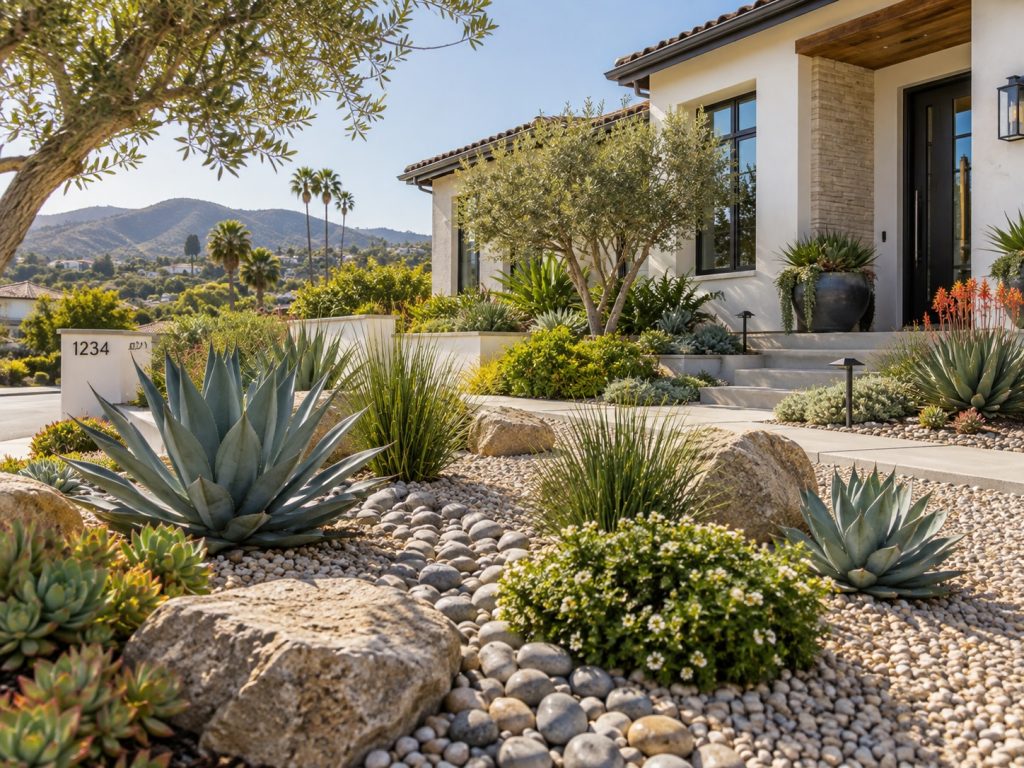
Choose the Right Landscape Rock for the Project
North County Mulch supplies river rock, crushed rock, gravel, decomposed granite, 3/8-inch rock, and other bulk landscape materials for projects throughout North County San Diego.
The best material depends on more than appearance. We also consider drainage, foot traffic, slope, intended use, and future maintenance.
For pathways, decorative beds, drainage areas, and xeriscaping projects, choosing the right material helps create a finished landscape that performs as well as it looks.
Build a Lower-Maintenance Rock Landscape From the Start
Stopping weeds begins before the rock is spread.
Proper weed removal, site preparation, landscape fabric, adequate rock coverage, and ongoing debris removal can dramatically reduce weed problems and make the landscape easier to maintain.
North County Mulch supplies landscape rock, gravel, DG, and bulk landscape materials for pickup and delivery throughout North County San Diego.
Frequently Asked Questions
What should we put under landscape rocks to prevent weeds?
Permeable landscape fabric is commonly used beneath permanent rock landscaping after existing weeds and roots have been removed. It helps separate the rock from native soil and suppress many weeds.
Will weeds grow through landscape fabric?
Yes. Weeds can emerge through damaged fabric, seams, edges, and planting openings. Many weeds also germinate in soil and organic debris that collects above the fabric.
How do we permanently stop weeds growing through gravel?
No landscape system stays permanently weed-free. Proper preparation, landscape fabric, adequate rock coverage, debris removal, and occasional weed removal can significantly reduce weed growth.
How deep should landscape rock be to stop weeds?
The correct depth depends on rock size, application, traffic, drainage, soil conditions, and whether landscape fabric is being used. Rock depth should be part of the complete installation rather than the only weed-control strategy.
Should we use plastic under landscape rock?
Permeable landscape fabric is generally better suited to planted rock landscapes because it allows water and air movement while helping separate rock from native soil.