
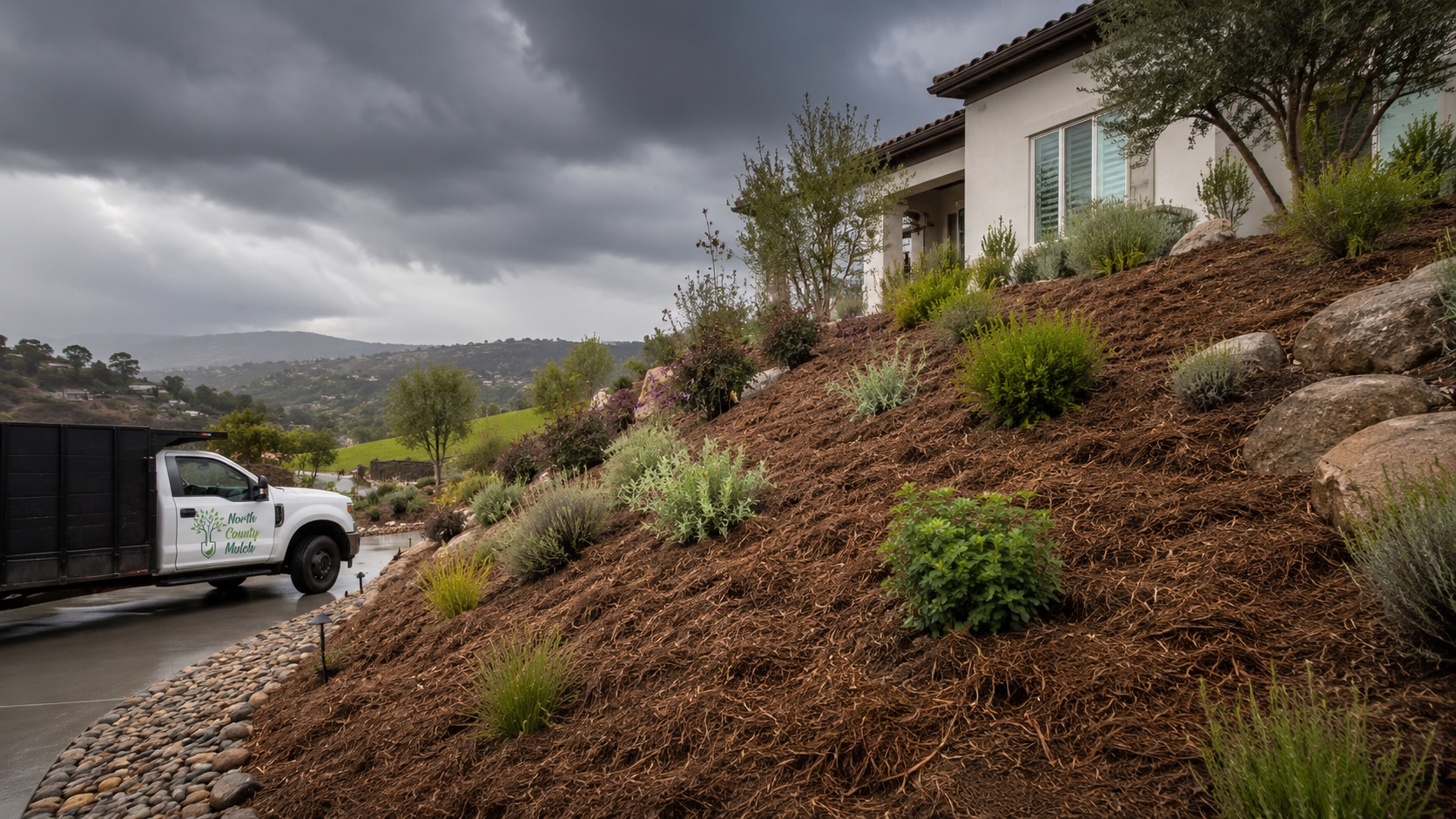
To stop dirt from washing away on a hill, cover bare soil before heavy rain, slow concentrated runoff, and establish deep-rooted plants. On suitable residential slopes, a 2 to 3-inch layer of Gorilla Hair Mulch protects exposed ground from raindrop impact. Its shredded fibers overlap as they settle, creating a more connected surface than loose bark nuggets. Gravel bands, swales, dry creek beds, fiber rolls, or erosion-control blankets may also be needed where stormwater becomes concentrated.
Sloped yards throughout Escondido and North County can lose valuable topsoil during strong winter rainstorms. Once runoff cuts a channel through bare ground, later rain can deepen the damage and carry sediment into drains, patios, streets, and lower planting beds.
At North County Mulch, we supply mulch, gravel, rock, and bulk landscape material delivery for property owners preparing their slopes before the rain arrives.
Why Hillside Soil Washes Away
Erosion begins when raindrops strike exposed ground and loosen soil particles. Water then travels downhill, carrying those particles with it. A protective mulch layer absorbs part of the rainfall impact and helps reduce runoff across bare soil.
Compacted ground can make the problem worse because less water enters the soil. Long, uninterrupted slopes also provide more distance for runoff to gain speed.
Mulch offers important surface protection, but it works best when combined with vegetation and properly planned features that slow, spread, or redirect water. Caltrans includes mulch, compost blankets, swales, fiber rolls, and erosion-control blankets among the methods used to reduce runoff and soil loss.
Why Loose Wood Chips Can Move During Heavy Rain
Standard wood chips can perform well on flat or gently sloped beds. On steep hills or directly inside a concentrated water path, large loose pieces may float, roll, or collect at the bottom of the slope.
Bark nuggets are particularly vulnerable because the individual pieces do not knit together. Performance also depends on:
- Slope angle
- Material size and shape
- Application depth
- Soil preparation
- Runoff speed and volume
For hillside erosion control landscaping, the mulch should maintain close contact with the ground rather than separate into scattered pieces. California guidance also recommends selecting mulch that stays against the soil instead of forming large clumps that runoff can move.
Why Gorilla Hair Mulch Works Well on Slopes
Our Gorilla Hair Mulch is made from finely shredded redwood or cedar bark. Its long, fibrous strands overlap and catch on one another as the material settles.
This creates a blanket-like layer that can:
- Reduce direct raindrop impact
- Protect bare soil
- Slow shallow surface runoff
- Retain moisture around plants
- Suppress weeds
North County Mulch recommends a 2 to 3-inch application for Gorilla Hair Mulch. Its fibrous texture makes it a practical option for homeowners searching for the best mulch for steep slopes.
Gorilla Hair Mulch is not a structural repair for an unstable hill. It is a surface-protection material for slopes where the grade and runoff conditions allow mulch to remain safely in place.
How to Stop Dirt From Washing Away on a Hill
1. Find the Water’s Path
Inspect the property before rain arrives. Look for:
- Downspouts aimed toward the slope
- Existing grooves or channels
- Compacted walking paths
- Exposed roots
- Low areas where runoff collects
Correcting one concentrated flow path may provide more protection than simply adding more material.
2. Prepare the Surface
Remove weeds and debris, then lightly roughen smooth soil so shredded mulch can settle into the surface.
Avoid aggressively tilling a steep hill. Excessive disturbance can loosen the soil and leave it more vulnerable to rain.
3. Apply Gorilla Hair Mulch
Spread an even layer approximately 2 to 3 inches deep. Keep the material several inches away from tree trunks, plant crowns, building siding, and other structures.
Use our mulch volume calculator to estimate how many cubic yards the hillside requires.
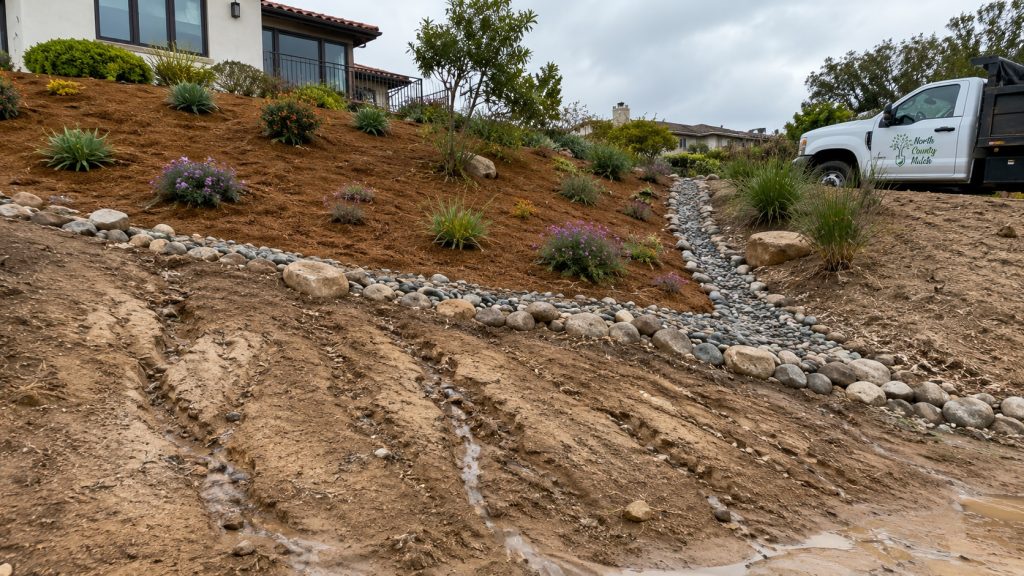
4. Pair Mulch With Rock Where Water Concentrates
Mulch protects the soil surface, but it should not carry fast-moving stormwater. Where runoff gathers, consider pairing organic material with:
- Gravel bands that interrupt shallow sheet flow
- A rock-lined swale
- A properly designed dry creek bed
- Fiber rolls or erosion-control blankets
- Terraces or retaining features where appropriate
UC guidance recommends drainage features such as swales, ditches, French drains, and dry creek beds to slow or guide hillside runoff.
5. Establish Deep-Rooted Plants
Mulch supplies immediate coverage, while plant roots support longer-term slope stability. Trees, shrubs, grasses, and groundcovers can hold soil, improve infiltration, and reduce runoff when they are suited to the location.
Choose plants based on sunlight, soil, irrigation, slope conditions, and local fire-safety requirements.
6. Inspect the Slope After Rain
Check for displaced mulch, bare patches, clogged rock channels, and new grooves. Repair small areas before another storm turns them into deeper erosion channels.
When Mulch Is Not Enough
Seek professional help when a hillside has:
- Deep gullies or major soil cracks
- Active sliding
- Exposed pipes or utilities
- Leaning retaining walls
- Runoff threatening a home
- A very steep or unusually long grade
These conditions may require engineered drainage, retaining systems, reinforced erosion blankets, or permitted grading. Mulch should be part of a complete erosion-control plan, not a replacement for structural work.
Gorilla Hair Mulch Bulk Delivery in North County
Large hillsides often require more material than bagged products can provide efficiently. North County Mulch offers landscape material delivery from Escondido for surrounding North County projects.
Our team can help estimate coverage and arrange gorilla hair mulch bulk delivery before the rainy season. Property owners can also compare our shredded mulch and gravel options for a coordinated slope-protection project.
Frequently Asked Questions
What is the best mulch for a steep slope?
Fibrous shredded bark generally creates a more connected layer than loose bark nuggets. Severe slopes may also need plants, netting, fiber rolls, drainage, or structural stabilization.
Can gravel stop hillside erosion?
Gravel can slow or guide runoff when installed as part of a planned drainage feature. Placing rock over eroding soil without controlling the water path may move the problem farther downhill.
How deep should Gorilla Hair Mulch be?
A 2 to 3-inch layer is appropriate for many landscape beds and suitable slopes. Concentrated runoff or severe grades may require additional erosion controls.