Blog

Best Gravel for Dog Runs: Pea Gravel, Drainage & Paw Safety Guide

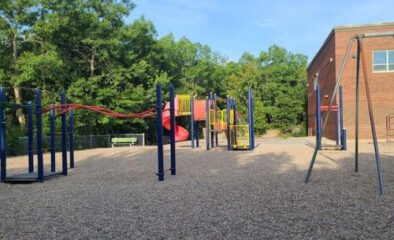
The best gravel for a dog run is typically washed, rounded pea gravel measuring approximately 3/8 to 1/2 inch. Its smooth edges are generally gentler on dog paws than sharp crushed stone, while the spaces between stones allow water to drain. For most residential dog runs, we recommend starting with a 2 to 3-inch surface […]

How Often Should You Replace Mulch in San Diego? Timing & Tips

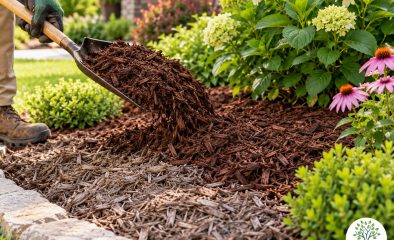
Most San Diego landscapes benefit from a mulch inspection every six months and a light refresh approximately once a year when needed. Organic mulch may require substantial replenishment after 1 to 2 years, although durable bark products can last longer. The best times to refresh landscape mulch in San Diego are early spring (February to […]

French Drain Gravel Calculator: How Much Drainage Rock Do You Need?

To calculate how much gravel you need for a French drain, multiply the trench length, width, and gravel-fill depth in feet, subtract the space occupied by the drainage pipe, and divide by 27 to convert cubic feet into cubic yards. For example, a 50-foot French drain measuring 12 inches wide and containing 18 inches of […]

How to Keep Mulch From Washing Away on a Slope: 7 Proven Tips

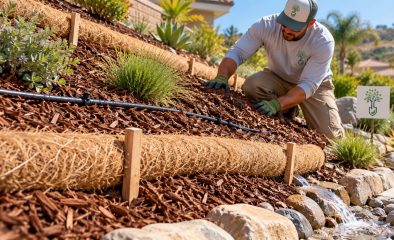
The best way to keep mulch from washing away on a slope is to use fibrous shredded bark, apply an even 2 to 3-inch layer, control concentrated runoff, and install erosion barriers where necessary. Gorilla Hair Mulch is a practical choice for many San Diego hillsides because its long fibers interlock and resist movement better […]

How to Compact Class 2 Base: Step-by-Step Guide for a Solid Foundation

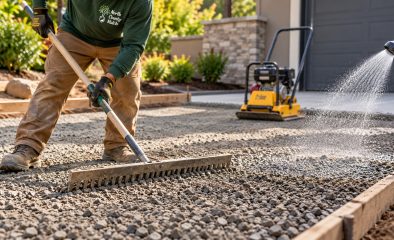
To compact Class 2 base correctly, prepare and compact the subgrade, spread aggregate in thin lifts, add enough moisture to support compaction, and make overlapping passes with a vibratory plate compactor or roller. For smaller projects, approximately 2 to 4 inches of loose material per lift is a practical starting point, depending on equipment capacity. […]

Landscape Material Staging for Contractors: How to Plan Mulch, Soil & Rock Deliveries on Large Jobs

Landscape material staging means planning where mulch, soil, rock, sand, and base materials will be delivered, stored, and moved before installation begins. On large jobs, we recommend separating each material, keeping truck and equipment routes open, sequencing deliveries around the construction schedule, protecting soil and mulch from contamination, and placing heavy aggregates as close as […]

How to Stop Weeds From Growing Through Landscape Rock

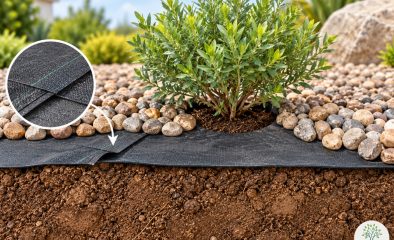
To stop weeds in gravel and landscape rock, we start by removing existing weeds and roots, preparing and grading the soil, installing permeable landscape fabric where appropriate, overlapping and securing the seams, and covering the surface completely with rock. Long-term weed control also requires keeping leaves, dust, soil, and grass clippings from accumulating between stones, […]

How to Install Decomposed Granite for Walkways & Patios: DIY DG Guide

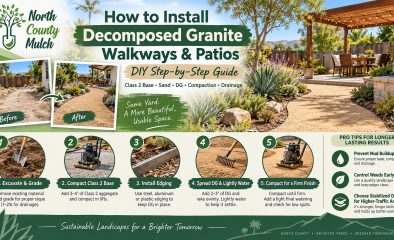
To install decomposed granite, start by excavating organic soil, establishing drainage slope, compacting the subgrade, and installing a stable aggregate base where site conditions or traffic require one. At North County Mulch, we recommend using Class 2 Base beneath higher-use DG patios and walkways where additional structural support is needed, then placing DG in manageable […]