
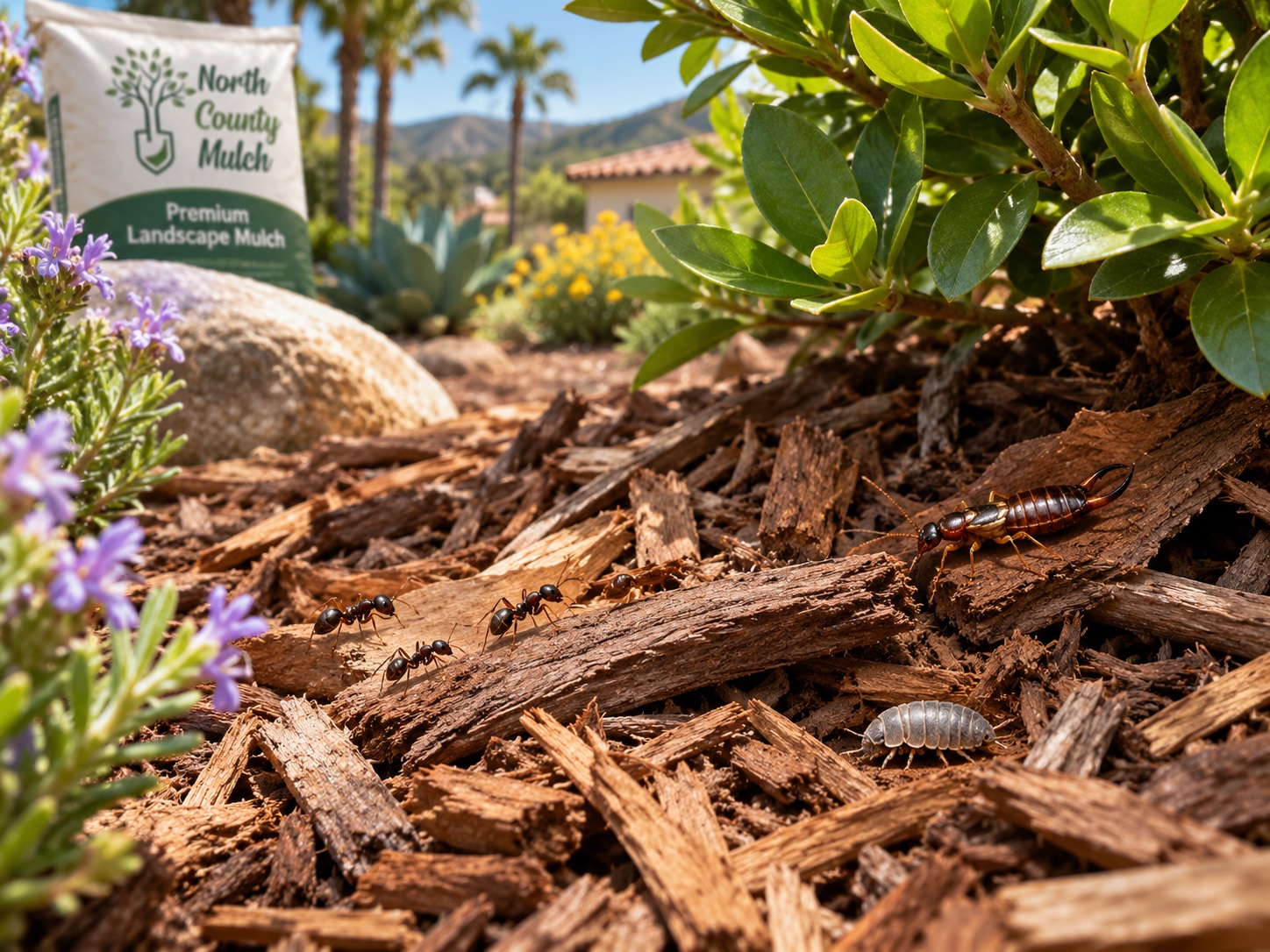
Yes, mulch can provide shelter for roaches, ants, earwigs, millipedes, and other insects, but it does not automatically attract harmful pests or cause an infestation. Organic mulch retains moisture and creates protected spaces where insects can live or forage. Many of these organisms are beneficial decomposers that help maintain healthy soil. To reduce pest problems, apply mulch approximately 2 to 3 inches deep, prevent excessive moisture, remove debris, and maintain separation between mulch beds and your home’s foundation.
Does Mulch Really Attract Bugs?
Mulch is one of the most popular landscaping materials in San Diego because it helps conserve moisture, suppress weeds, and improve curb appeal.
However, homeowners occasionally notice insects moving through mulch beds and wonder whether the material is responsible.
At North County Mulch, we help homeowners and landscapers throughout Escondido and North County San Diego select appropriate ground cover for their properties.
The important distinction is that mulch creates a habitat for insects, but finding bugs in mulch does not automatically indicate a pest problem.
Some insects feed on decomposing organic matter, while others use the protected spaces for shelter.
Understanding which insects are present helps determine whether action is necessary.
5 Common Bugs Found in Mulch Beds
1. Cockroaches
Certain outdoor cockroach species prefer dark, protected areas with available moisture.
Thick, damp mulch near foundations may provide favorable hiding conditions.
However, mulch does not automatically cause cockroach infestations.
According to the University of California Integrated Pest Management Program, cockroach prevention involves eliminating moisture sources, reducing outdoor hiding places, and sealing building entry points.
Our Recommendation: Avoid excessive irrigation, keep landscaping debris away from exterior walls, and repair leaking outdoor faucets.
2. Ants
Ants are common throughout Southern California landscapes.
Some species may nest beneath mulch or forage for food around garden beds.
However, many ants are beneficial because they feed on other insects and help recycle organic material.
Ants may become a concern when colonies establish themselves near entryways or begin entering the home.
Our Recommendation: Maintain a clear buffer between mulch and the foundation, remove nearby food sources, and inspect persistent ant trails.
3. Earwigs
Earwigs prefer cool, dark, moist environments.
They often shelter beneath mulch, leaves, rocks, and landscape debris during the day.
Although earwigs can feed on certain garden plants, they also consume other insects and decaying organic matter.
Our Recommendation: Reduce excessive moisture and accumulated debris where earwig populations become troublesome.
4. Millipedes and Pill Bugs
Millipedes and pill bugs commonly live in damp landscaping materials.
These organisms help break down decaying leaves and other organic matter.
They are generally harmless to established landscape plants, although they can occasionally become nuisance visitors around homes.
Our Recommendation: Maintain proper drainage and avoid constantly saturated landscape beds.
5. Termites
Termites can forage through moist soil beneath mulch.
However, installing wood mulch does not necessarily introduce termites or increase the likelihood of structural infestation.
The greater concern is excessive moisture and concealed access near foundations.
Our Recommendation: Keep mulch away from siding, stucco, and structural wood while maintaining visible areas for termite inspections.
For additional guidance, read our related article, Mulch and Pests: How to Beautify Your Yard Without Inviting Termites.

Which Mulch Attracts the Fewest Bugs?
Different landscaping materials provide different habitats for insects.
| Mulch Material | Insect Considerations |
|---|---|
| Shredded wood mulch | May shelter insects when excessively moist |
| Natural bark mulch | Provides organic habitat for decomposers |
| Wood chips | Supports beneficial soil organisms |
| Gorilla Hair Mulch | Provides moisture retention and shelter like other organic materials |
| Cedar mulch | Some aromatic compounds can deter certain insects |
| Gravel or landscape rock | Does not decompose but can still provide insect shelter |
Important: No mulch material guarantees a pest-free landscape.
Although certain aromatic wood products may discourage some insect species, their effectiveness varies with the material and environmental conditions.
We recommend selecting mulch based on landscaping performance, drainage, maintenance requirements, and the property’s specific pest concerns.
7 Ways to Prevent Bugs in Mulch Beds
Most mulch-related pest concerns can be reduced through proper installation and regular maintenance.
1. Maintain the Correct Mulch Depth
Apply approximately 2 to 3 inches of organic mulch in most established landscape beds.
Excessive depth can retain too much moisture and create additional sheltered spaces.
2. Keep Mulch Away From Your Home
Avoid placing wood mulch against foundations, siding, or stucco.
For ant prevention, UC Integrated Pest Management recommends keeping mulch and vegetation at least one foot away from building foundations.
We recommend maintaining accessible inspection space around exterior walls.
3. Avoid Overwatering
San Diego landscapes often rely on irrigation during dry periods.
However, constantly wet mulch creates favorable conditions for moisture-seeking insects.
Adjust irrigation schedules based on soil conditions and plant requirements.
4. Remove Accumulated Debris
Fallen leaves, decaying branches, and other organic debris can provide additional insect shelter.
We recommend periodically removing excess debris from garden beds.
5. Maintain Good Drainage
Poor drainage can create persistently damp soil beneath mulch.
Correct low spots, leaking irrigation equipment, and concentrated runoff where necessary.
6. Keep Mulch Away From Tree Trunks
Mulch piled against tree trunks can trap moisture and encourage bark deterioration.
Maintain a visible root flare and avoid creating mulch volcanoes.
7. Inspect Before Refreshing
Before adding new material, gently inspect existing mulch for unusual insect activity.
Not every insect requires treatment, but persistent pest activity near the home may warrant professional identification.
Should You Remove Mulch if You Find Bugs?
Usually, no.
Most landscape beds naturally contain insects and other organisms that contribute to decomposition and soil health.
Removing all mulch can eliminate useful ground cover without addressing the underlying moisture or pest problem.
We recommend identifying the insects first, checking drainage, and correcting excessive mulch depth.
If cockroaches, termites, or nuisance ants are repeatedly entering the home, consult a qualified pest control professional.
Frequently Asked Questions
Does mulch attract cockroaches?
Moist mulch can provide shelter for certain outdoor cockroach species. However, cockroaches also depend on suitable food, water, and hiding places.
Why are there ants in my mulch?
Ants may use mulch for nesting or foraging. Their presence does not necessarily indicate damage or an infestation.
Do wood chips attract termites?
Wood chips do not automatically introduce termites. However, moist mulch near foundations can provide favorable foraging conditions for termites already present.
Is bark mulch better than wood chips for preventing bugs?
Neither material is guaranteed to prevent insects. Proper mulch depth, moisture management, and maintenance generally matter more than the material alone.
Should you spray insecticide on mulch?
Routine spraying is usually unnecessary. We recommend identifying the pest and using targeted management methods when treatment is justified.
Choose Quality Landscape Mulch From North County Mulch
Mulch can support healthy landscaping without creating unnecessary pest concerns when installed and maintained correctly.
At North County Mulch, we supply shredded mulch, natural bark, Gorilla Hair Mulch, dyed mulch, and other landscape materials throughout Escondido, Carlsbad, Oceanside, Poway, Fallbrook, and surrounding San Diego County communities.
Our bulk mulch products and delivery services help homeowners and landscapers select suitable materials and maintain appropriate coverage.
Whether you’re refreshing an existing garden bed or planning a new landscape, we can help determine the materials and quantities needed.