
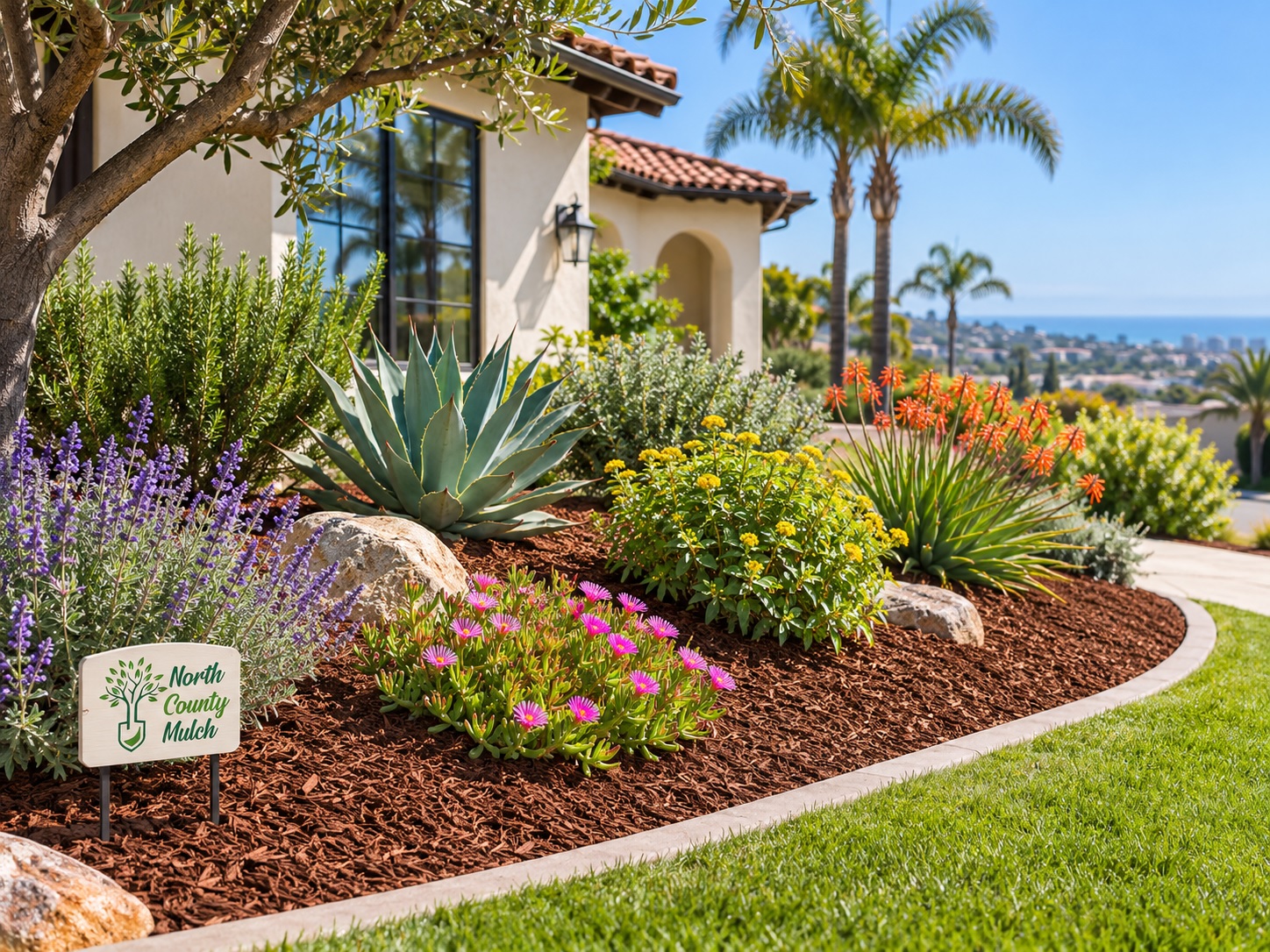
Most San Diego landscapes benefit from a mulch inspection every six months and a light refresh approximately once a year when needed. Organic mulch may require substantial replenishment after 1 to 2 years, although durable bark products can last longer. The best times to refresh landscape mulch in San Diego are early spring (February to March) and fall (October to November). Instead of automatically removing old material, check its depth, condition, and ability to protect the soil before adding fresh mulch.
How Often Should You Replace Mulch in San Diego?
Mulch does more than improve curb appeal. It helps retain soil moisture, regulate temperatures, reduce weeds, and protect plant roots from environmental stress.
However, San Diego’s sunshine, dry summers, occasional heavy rainfall, and seasonal winds can affect how quickly landscaping materials deteriorate.
At North County Mulch, we help homeowners, landscaping contractors, and property managers throughout San Diego County select materials that perform well in Southern California conditions.
A common question is whether mulch should be replaced every year.
The answer is no. Complete annual mulch replacement is usually unnecessary when the existing material remains in good condition.
We recommend inspecting mulch regularly and replenishing only what is needed to maintain appropriate coverage.
How Long Do Different Types of Mulch Last?
The lifespan of landscape mulch depends on its composition, particle size, sun exposure, moisture, and maintenance.
Mulch Lifespan Comparison
| Mulch Type | General Maintenance Timeline |
|---|---|
| Shredded wood mulch | Inspect every 6 months; replenish as needed |
| Dyed mulch | Refresh appearance approximately every 6 to 12 months if desired |
| Natural bark mulch | Often remains serviceable for 2 years or longer |
| Gorilla Hair Mulch | Can last up to approximately 2 years before replenishment |
| Wood chips | Inspect annually; replenish as coverage decreases |
| Landscape rock | Does not decompose; occasional cleaning and leveling |
These are general planning guidelines, not guaranteed replacement intervals.
Does Gorilla Hair Mulch Last Longer?
Gorilla Hair Mulch contains long, fibrous bark strands that interlock.
This structure helps reduce material movement on slopes and in areas exposed to wind.
Our gorilla hair mulch can last up to approximately two years before substantial replenishment becomes necessary, depending on site conditions.
We recommend checking coverage rather than relying exclusively on the installation date.
5 Signs It’s Time to Refresh Landscape Mulch
Not every change in mulch appearance requires complete replacement.
However, several conditions indicate that maintenance may be needed.
1. Mulch Has Become Too Thin
As organic mulch decomposes, its thickness gradually decreases.
When exposed soil becomes visible, water evaporates more easily and weeds may establish themselves.
For many ornamental landscape beds, we recommend maintaining approximately 2 to 3 inches of mulch, adjusted for material texture and plant requirements.
2. The Color Has Faded
Sun exposure gradually changes the color of natural and dyed mulch.
Faded material may still provide effective soil protection.
If the mulch remains thick enough, consider lightly raking it before purchasing additional material.
3. Weeds Are Growing Through the Mulch
When mulch becomes thin or displaced, sunlight can reach the underlying soil.
This creates opportunities for weeds to germinate.
We recommend removing existing weeds and restoring adequate mulch coverage.
4. Mulch Has Become Compacted
Fine mulch can settle into a dense layer that restricts water movement.
If irrigation water runs across the surface rather than soaking through, loosen the material and check for excessive buildup.
5. Mulch Has Washed Away
Heavy seasonal rain or runoff can move mulch from slopes and drainage channels.
Replacing displaced material without correcting the runoff may lead to repeated problems.
For these locations, consider fibrous mulch and appropriate erosion-control measures.
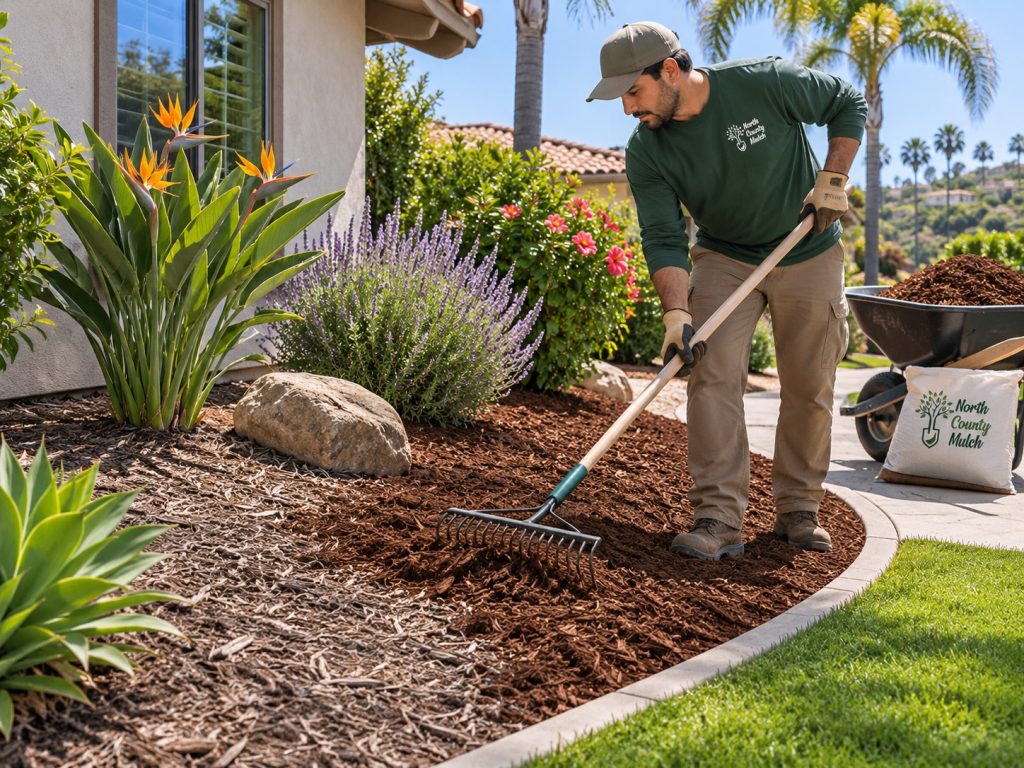
When Is the Best Time to Mulch in San Diego?
Although mulch can be applied throughout the year, seasonal timing helps homeowners plan landscape maintenance.
| Season | Recommended Mulch Maintenance |
|---|---|
| February to March | Inspect winter damage and refresh before warmer weather |
| April to June | Check mulch depth and exposed soil before summer |
| July to September | Monitor moisture retention and replace displaced material |
| October to November | Refresh beds before seasonal rain and cooler weather |
| December to January | Inspect drainage and remove accumulated debris |
Spring Mulch Refresh
Early spring is an excellent opportunity to prepare garden beds for warmer temperatures.
Fresh mulch helps shade exposed soil and reduce moisture loss during the growing season.
Fall Mulch Refresh
Fall is another practical time for landscape maintenance.
We recommend checking mulch depth, removing debris, and repairing areas affected by summer heat or wind.
Our recommendation: Schedule a full landscape inspection in early spring and another in fall, then replenish material only where needed.
Should You Remove Old Mulch Before Adding New?
In most cases, removing all existing organic mulch is unnecessary.
As wood-based mulch decomposes, it contributes organic matter to the soil.
According to University of California Integrated Pest Management, organic mulch should be replenished periodically because it naturally decomposes, moves, and settles.
Before refreshing a bed, we recommend:
- Removing weeds, leaves, and debris.
- Raking the existing material to loosen compacted areas.
- Measuring the remaining mulch depth.
- Removing excessively thick or deteriorated material.
- Adding enough fresh mulch to restore appropriate coverage.
Avoid piling mulch against tree trunks, plant crowns, siding, or drainage openings.
San Diego wildfire consideration: Within approximately five feet of structures, use noncombustible landscaping materials such as gravel or stone instead of combustible wood mulch, consistent with defensible-space guidance.
For detailed instructions, read our related article, How to Refresh Old Mulch: Should You Remove It or Layer Over It?.
How Much Mulch Do You Need for a Refresh?
A landscape refresh often requires considerably less material than an initial installation.
Use this simple formula:
Cubic Yards = Area in Square Feet × Added Depth in Inches ÷ 324
For example, refreshing a 500-square-foot landscape bed with one additional inch of mulch requires:
500 × 1 ÷ 324 = 1.54 cubic yards
Allow a small additional amount for uneven coverage or material loss.
Our mulch products and bulk delivery options help homeowners and contractors select suitable materials for projects of different sizes.
Frequently Asked Questions
Do you need to replace mulch every year?
Not necessarily. Many organic mulches need only occasional replenishment. Replace existing material when it becomes excessively compacted, deteriorated, contaminated, or otherwise unsuitable.
Can you put fresh mulch over old mulch?
Yes, provided the existing material is loose, draining properly, and not excessively deep. Maintain the recommended total depth rather than repeatedly stacking new layers.
What month is best for mulching in San Diego?
February through March and October through November are practical times for seasonal landscape refreshes. However, mulch can be replenished whenever coverage becomes inadequate.
How often should Gorilla Hair Mulch be replaced?
Gorilla Hair Mulch can last up to approximately two years before requiring substantial replenishment, depending on exposure, moisture, and landscape conditions.
Keep Your Landscape Looking Fresh With North County Mulch
Knowing how often to replace mulch helps homeowners maintain attractive landscapes without unnecessary material purchases.
At North County Mulch, we supply Gorilla Hair Mulch, natural bark, dyed mulch, wood chips, and other landscape materials throughout Escondido, Carlsbad, Oceanside, Poway, Fallbrook, and surrounding San Diego County communities.
Whether you’re refreshing a small garden bed or maintaining an entire commercial landscape, we can help estimate material quantities and coordinate bulk delivery.