
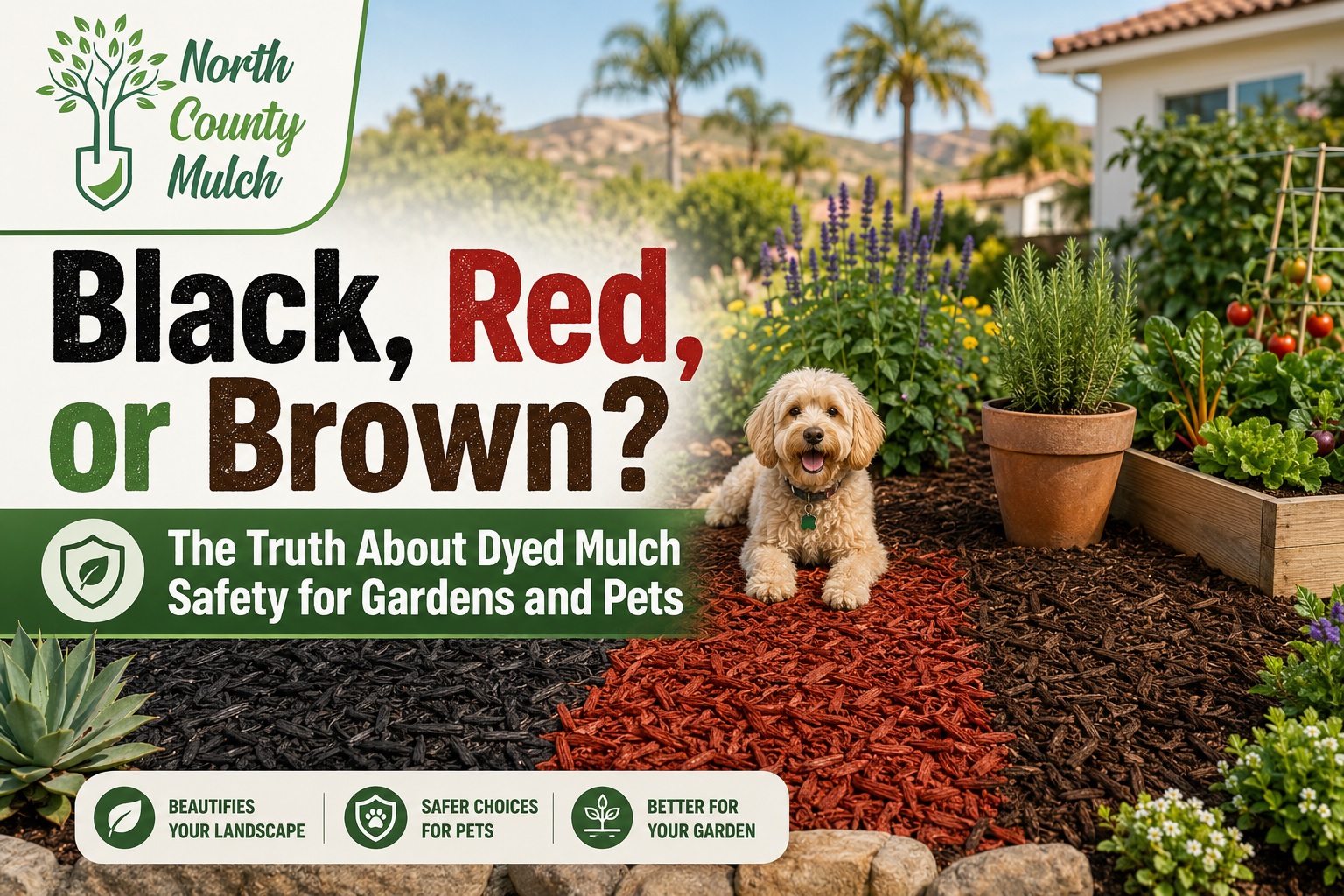
High-quality dyed mulch made with carbon-based or iron oxide colorants is generally considered safe for ornamental landscapes. University of Massachusetts guidance reports no evidence that common mulch dyes are toxic. Iron oxide is a compound of iron and oxygen, while carbon-based colorants are similar to materials used in inks and cosmetics. The wood source matters more than the color because mulch made from poorly screened construction debris may contain treated lumber. Pet owners should also prevent dogs from eating wood mulch and completely avoid cocoa bean mulch, which can cause chocolate-like poisoning.
At North County Mulch, our dyed mulch is available in black, red, and brown finishes for San Diego County landscapes.
What Gives Dyed Mulch Its Color?
Commercial wood mulch is commonly colored with one of two pigment types:
Black mulch commonly uses a carbon-based colorant. Carbon pigments create a deep, neutral finish that works well with contemporary homes, decorative stone, and drought-tolerant plants.
Red and brown mulch commonly use iron oxide-based colorants. Iron oxide occurs when iron combines with oxygen and is not considered toxic to soil at the concentrations used for landscape mulch.
The colorant is applied to the surface of shredded wood rather than injected into the material. This explains why recently delivered mulch can transfer some color when it is wet. The pigment itself is usually less concerning than whether the underlying wood is clean and responsibly sourced.
Is Dyed Mulch Safe for Dogs?
Homeowners asking, “Is dyed mulch safe for dogs?” should separate toxicity from ingestion risk.
A reputable dyed wood mulch with non-toxic colorants can generally be used in yards where dogs walk, play, or rest. However, no wood mulch should be treated as edible. Dogs that chew wood pieces may experience mouth irritation, splinters, vomiting, or a possible digestive blockage.
Cocoa bean mulch presents a different risk. It can contain theobromine and caffeine, the same compounds that make chocolate dangerous to dogs. The ASPCA warns that ingestion may cause vomiting, diarrhea, an elevated heart rate, tremors, hyperactivity, or seizures.
For pet areas, supervise dogs that regularly chew sticks or landscape materials. A pet run may also benefit from larger, stable wood chips that are less likely to stick to fur or become scattered.
Is Dyed Mulch Safe for Vegetable Gardens?
The dye is usually not the primary concern in an edible garden. Wood origin deserves more attention.
University extension guidance notes that dyed mulch made from recycled construction and demolition wood may accidentally include chromated copper arsenate-treated lumber. Research reviewed by the EPA found that some mulch made from construction debris released arsenic, while tested mulch made from virgin materials did not show detectable arsenic.
For ornamental flower beds, shrubs, pathways, and foundation plantings, quality dyed mulch is a practical decorative option. For vegetable beds, herb gardens, or areas where children frequently handle the soil, we recommend choosing a product with a clearly identified clean wood source. Natural mulch, compost, or another traceable organic material may be preferred when food production is the main goal.
Black Mulch vs Natural Wood Chips
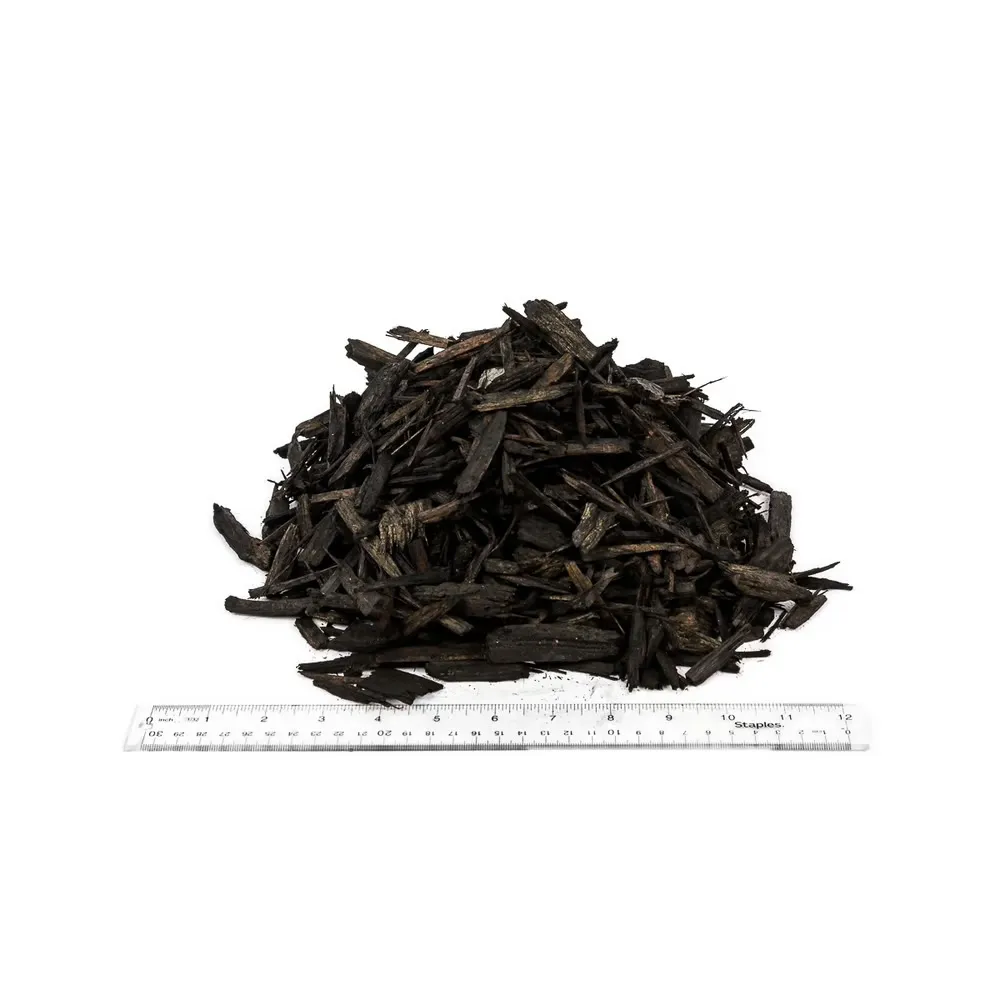
The choice between black mulch and natural wood chips is mainly about appearance, longevity, and landscape purpose.
Black mulch provides sharp contrast around light-colored homes, green shrubs, ornamental grasses, and pale decorative rock. It creates a polished appearance that suits modern San Diego landscapes.
Natural wood chips provide a softer, rustic look. As untreated wood is exposed to sunlight, irrigation, and air, it gradually fades toward gray. Natural chips work well in informal gardens, pathways, orchards, utility areas, and landscapes where color consistency is less important.
Both products can conserve soil moisture, moderate root-zone temperatures, and help suppress weeds when installed correctly.
Does Dyed Mulch Stain Concrete Driveways?
Fresh dyed mulch can temporarily mark light concrete, pavers, walls, or curbs when the material is wet. University of Massachusetts guidance explains that colorant not fully attached to the wood may come off through contact, particularly when wet.
Before a bulk landscape material delivery, place a heavy tarp over light-colored concrete. Extend the tarp beyond the expected pile so loose pieces do not touch the driveway. Avoid washing a fresh pile across the concrete because runoff can spread pigment.
Allowing newly installed mulch to dry before heavy irrigation also reduces color transfer.
Does Dyed Mulch Fade in Southern California Sun?
All wood mulch changes under intense North County sunlight. Natural mulch may fade from brown to gray within six months to a year, while quality dyed mulch is designed to maintain a more consistent appearance for longer. Even dyed products eventually lose color due to UV exposure, irrigation, foot traffic, and weather.
Black and dark brown are practical choices for homeowners seeking a longer-lasting modern finish. Red creates stronger contrast but may make fading more noticeable because the original color is brighter.
A thin refresh layer can restore color without removing the entire bed. Use our mulch volume calculator to estimate the amount needed for a new installation or seasonal refresh.
Choosing the Right Color
Choose black mulch for modern homes, bold plant contrast, and crisp borders. Select dark brown for a natural appearance with improved color consistency. Use red when the landscape needs warmth and strong visual definition.
At North County Mulch, we help San Diego County homeowners compare color, wood type, coverage, delivery placement, and landscape use before ordering. The safest choice is not determined by color alone. Quality sourcing, proper installation, and responsible pet supervision matter most.