
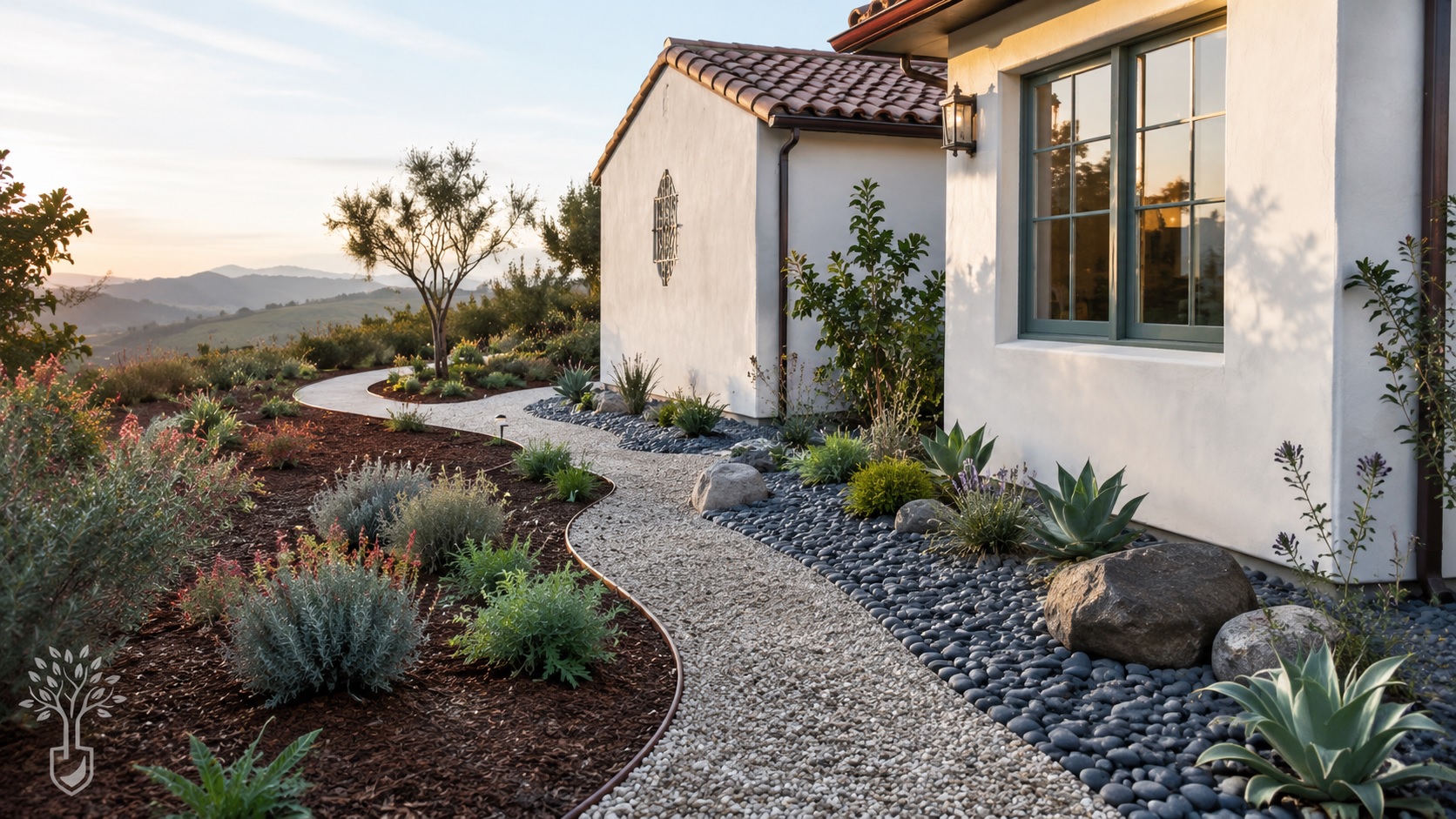
For homeowners across Escondido, San Marcos, Vista, Poway, Fallbrook, Carlsbad, Oceanside, and greater San Diego County, curb appeal must be balanced with wildfire awareness. At North County Mulch, our approach to landscape material planning starts with beauty, soil health, and smarter defensible space landscaping San Diego properties can use to reduce avoidable fuel near the home.
Fire resistant mulch planning does not mean removing every attractive landscape feature. It means placing the right material in the right zone. Decorative rock, clean basalt, gravel, and stone belong closest to structures. Heavier organic mulch, coarse bark, composted wood chips, and playground surfacing belong farther from the home where they can still protect soil, retain moisture, and create a finished landscape.
Why Fire-Smart Mulch Placement Matters in San Diego
San Diego yards face a tough mix of dry weather, slope exposure, Santa Ana wind events, and long summer heat. Fine, dry landscape debris can become a fuel source when embers land during a wildfire event. That is why mulch selection should follow a zone-based layout instead of a one-material-fits-all plan.
The goal is simple: keep combustible material away from the foundation, reduce continuous fuel beds, and still preserve healthy soil in planted areas.
Understanding Defensible Space Zones
CAL FIRE guidance breaks the area around a home into zones. For landscape material planning, the two most important areas are closest to the structure.
Zone 0: 0 to 5 Feet from the Structure
This is the ember-resistant zone. It includes the area directly against the home, deck, fence connection, garage, vents, and foundation line. In this space, avoid combustible mulch.
Better choices include:
- Decorative rock
- Clean basalt
- Gravel
- Decomposed granite
- Concrete pavers
- Stone borders
- Bare mineral soil where appropriate
Rock can frame walkways, drip lines, patio edges, and planting pockets while reducing organic material directly against the home.
Zone 1 and Zone 2: 5 to 50 Feet and Beyond
Farther away from the structure, organic mulch can still be useful when applied with care. The key is choosing heavier, coarser, moisture-holding materials instead of light, fine, dry material that can carry flame quickly.
Good options farther from the home include:
- Composted wood chips
- Medium bark
- Walk-on bark
- Coarse shredded mulch
- Compost blends for planting beds
- Playground wood chips in recreation areas
These materials help reduce soil evaporation, protect roots, and suppress weeds without placing combustible fuel directly against the home.
Fire Resistant Mulch Does Not Always Mean Organic Mulch
The phrase fire resistant mulch can be confusing. No wood mulch is truly fireproof. Some organic mulch materials perform better than others because they are heavier, coarser, or more composted, but they are still combustible.
For the safest layout, use noncombustible material in the first 5 feet. Then transition into organic material once the landscape moves away from walls, vents, fences, and deck edges.
A strong fire-smart material plan may look like this:
| Landscape Area | Best Material Choice | Why It Works |
|---|---|---|
| 0 to 5 feet from home | Decorative rock, basalt, gravel | Reduces combustible material near the structure |
| 5 to 30 feet from home | Composted wood chips or coarse bark in separated beds | Supports plants while avoiding continuous fuel strips |
| 30 to 50 feet and beyond | Organic mulch, bark, composted chips, playground chips | Improves soil moisture and weed control farther from the structure |
| Play areas | Playground wood chips | Cushioned surface for recreation zones away from structures |
Where Decorative Rock and Clean Basalt Make Sense
Decorative rock and clean basalt are strong choices for the foundation zone, side yards, utility access areas, drainage paths, and modern drought-conscious landscapes. They provide a clean finished look without adding dry bark or shredded material against stucco, siding, garage walls, or fence lines.
Use rock near:
- House foundations
- Garage borders
- AC units
- Walkway edges
- Patio transitions
- Narrow side yards
- Fence-to-home connection areas
- Outdoor utility zones
For San Diego homes with slope exposure, rock can also help create a visible break between planted areas and hardscape surfaces.
Where Premium Organic Mulch Still Belongs
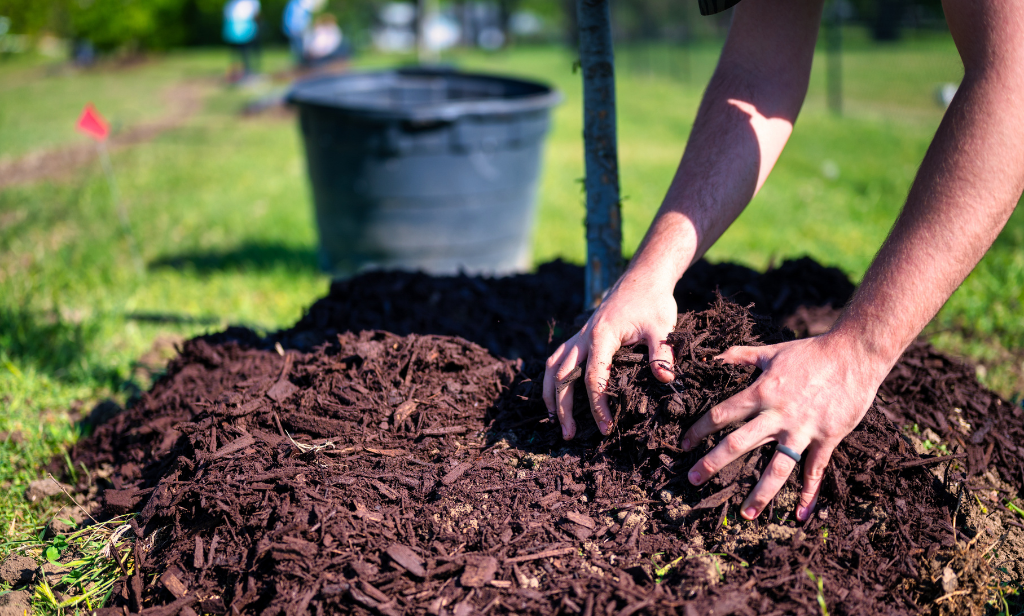
Organic mulch still has a valuable place in Southern California yards. It helps soil retain moisture, keeps root zones cooler, and reduces weed pressure. That matters for homeowners trying to keep plants healthy through dry months.
Use organic mulch in:
- Tree rings set away from the structure
- Shrub beds beyond the immediate foundation zone
- Garden borders
- Orchard areas
- Large landscape islands
- Pathways away from buildings
- Commercial planting areas
North County Mulch supplies mulch in San Diego for homeowners, landscapers, and property managers who need quality bulk material. For softer soil improvement, compost can help build healthier planting zones without relying only on bark coverage.
Bulk Mulch Delivery Near Me for Fire-Smart Projects
A fire-smart landscape often uses more than one material. A project may need clean rock near the house, compost for planting pockets, shredded mulch for outer beds, and playground wood chips for recreation areas.
That is where local sourcing matters. Searching for bulk mulch delivery near me should lead to a supplier that understands San Diego conditions, material volume, and mixed-product orders.
We helps customers plan materials for:
- Residential refreshes
- HOA landscape upgrades
- Commercial property maintenance
- Fire-conscious yard redesigns
- Playground surfacing projects
- Large planting bed installations
- Rock and mulch combination layouts
For larger outdoor recreation areas, we also support playground wood chips wholesale needs for schools, parks, HOAs, and community spaces.
Best Practices for Fire-Smart Mulch Application
Use these practical guidelines when planning a safer mulch layout:
- Keep wood mulch out of the first 5 feet around the structure.
- Use rock, clean basalt, gravel, or pavers next to foundations.
- Avoid deep piles of fine, dry bark near walls, decks, and fences.
- Break up organic mulch beds with rock, walkways, concrete, or lawn.
- Keep leaves, needles, and dead plant debris removed from mulch beds.
- Use composted or coarse organic mulch farther from the home.
- Maintain irrigation so plant beds stay healthy and less dry.
- Refresh material before it becomes dusty, thin, or uneven.
Build a Safer, Better-Looking Landscape with the Right Materials
A wildfire-aware yard can still look polished, natural, and welcoming. The best results come from using decorative rock and clean basalt near the home, then placing premium organic mulch farther out where soil moisture, plant health, and weed control matter most.
North County Mulch helps San Diego homeowners, landscapers, HOAs, and property managers choose the right material mix for curb appeal, performance, and smarter defensible space planning.
FAQ
What is the best fire resistant mulch for San Diego homes?
The best choice near the home is noncombustible material such as decorative rock, clean basalt, gravel, decomposed granite, or pavers. Organic mulch should be used farther from the structure.
Can wood mulch be used in defensible space landscaping San Diego homes need?
Yes, but placement matters. Avoid wood mulch in the 0 to 5 foot zone. Use composted or coarse mulch farther away, and break up continuous beds with rock or hardscape.
Is rock better than bark mulch near a foundation?
Yes. Rock, gravel, basalt, and pavers are better near foundations because they do not add combustible organic fuel directly against the structure.
Does North County Mulch offer bulk mulch delivery near me?
North County Mulch provides pickup and delivery options for mulch, rock, compost, shredded mulch, and other landscape materials across San Diego County.
Are playground wood chips wholesale options safe for every area?
Playground wood chips are best used in recreation zones away from structures, especially where cushioning and clean coverage are needed. For areas directly against buildings, choose rock or another noncombustible material.