
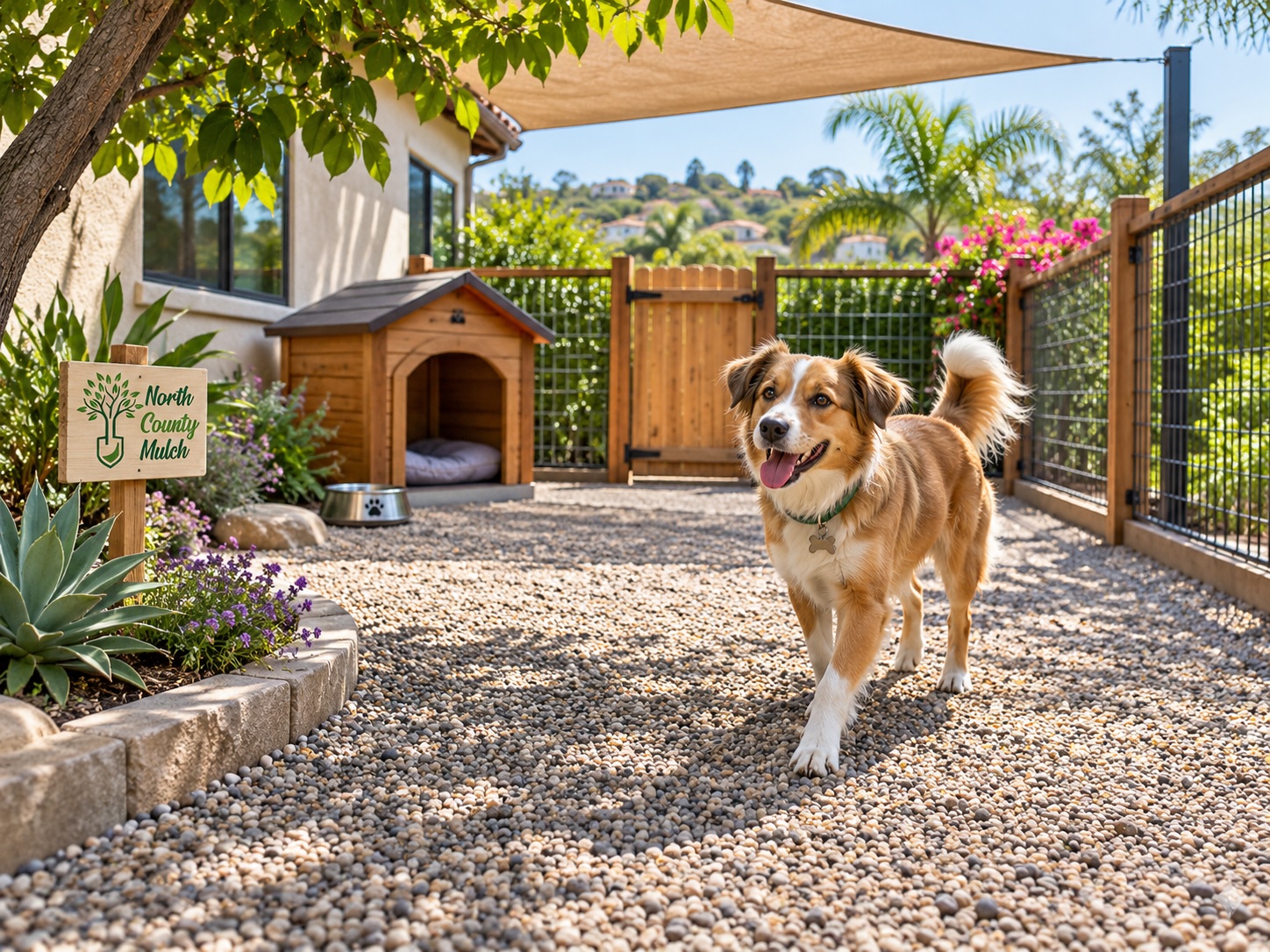
The best gravel for a dog run is typically washed, rounded pea gravel measuring approximately 3/8 to 1/2 inch. Its smooth edges are generally gentler on dog paws than sharp crushed stone, while the spaces between stones allow water to drain. For most residential dog runs, we recommend starting with a 2 to 3-inch surface layer over a properly prepared base. However, gravel is not suitable for dogs that swallow rocks, and shaded areas, proper drainage, and regular cleaning are essential for a comfortable dog-friendly yard.
What Is the Best Gravel for a Dog Run?
Creating a comfortable outdoor space for dogs requires more than choosing attractive landscaping materials.
San Diego homeowners often struggle with worn-out grass, muddy patches after rain, and areas where dogs repeatedly run or dig.
At North County Mulch, we help homeowners and landscapers throughout Escondido and North County San Diego select gravel, decomposed granite, and drainage materials for outdoor projects.
For many dog runs, washed pea gravel provides a practical balance between drainage and paw comfort.
However, the best surface depends on your dog’s size, activity level, behavior, and the property’s drainage conditions.
Comparing the Best Types of Dog Yard Gravel
Not all gravel provides the same performance.
| Gravel Type | Paw Comfort | Drainage | Best Use |
|---|---|---|---|
| Pea gravel | Generally comfortable | Excellent | Dog run surface |
| Small rounded gravel | Generally comfortable | Excellent | Walking and exercise areas |
| Decomposed granite | Firm but can become dusty | Moderate | Compacted paths and mixed-use areas |
| Crushed stone | Can be abrasive | Good when clean and open-graded | Drainage and base layers |
| Large river rock | Often unstable underfoot | Excellent | Borders and drainage zones |
1. Pea Gravel: Best for Most Dog Runs
Pea gravel consists of small, naturally rounded stones.
Its smooth texture helps reduce abrasion compared with sharp, angular aggregates.
We recommend considering washed pea gravel approximately 3/8 to 1/2 inch in diameter for dog run surfaces.
Benefits include:
- Good water movement through the gravel layer
- Fewer sharp edges against paw pads
- Reduced muddy surface conditions
- Easy removal of visible solid waste
- Natural appearance that complements San Diego landscaping
However, rounded gravel can shift beneath active dogs and requires periodic leveling.
Important: Dogs that chew or swallow rocks should not have unrestricted access to loose gravel. Swallowed stones can cause dangerous intestinal obstructions.
2. Decomposed Granite: Best for Firmer Surfaces
Decomposed granite, commonly called DG, consists of weathered granite particles.
Unlike pea gravel, DG contains fine material that compacts into a relatively firm surface.
This makes it useful for walking paths and certain pet-friendly landscape designs.
However, fine particles can become dusty during dry San Diego summers, and frequent urination may lead to odor concerns.
We generally prefer washed pea gravel when drainage and reduced surface dust are the main priorities.
3. Crushed Stone: Best for Drainage Base Layers
Crushed stone has angular edges that interlock when compacted.
This makes it useful for creating a stable foundation beneath a dog run.
However, sharp crushed rock is usually less comfortable as the exposed surface where dogs walk, run, or rest.
We recommend using appropriately specified crushed aggregate for the base rather than automatically selecting it as the final walking surface.
What Size Gravel Is Best for Dog Paws?
Stone size influences walking comfort, drainage, and surface stability.
For many residential dog runs, approximately 3/8-inch washed pea gravel is a practical starting choice.
Smaller loose stones may lodge between toes or create an ingestion risk, while larger rocks may feel unstable beneath paws.
We recommend checking the actual material before placing a bulk order.
For senior dogs, puppies, or pets with paw sensitivity, a combination of gravel, stable walking surfaces, and comfortable resting areas may be more suitable.
How to Build a Dog Run With Proper Drainage
Even the best gravel cannot fix a poorly drained yard by itself.
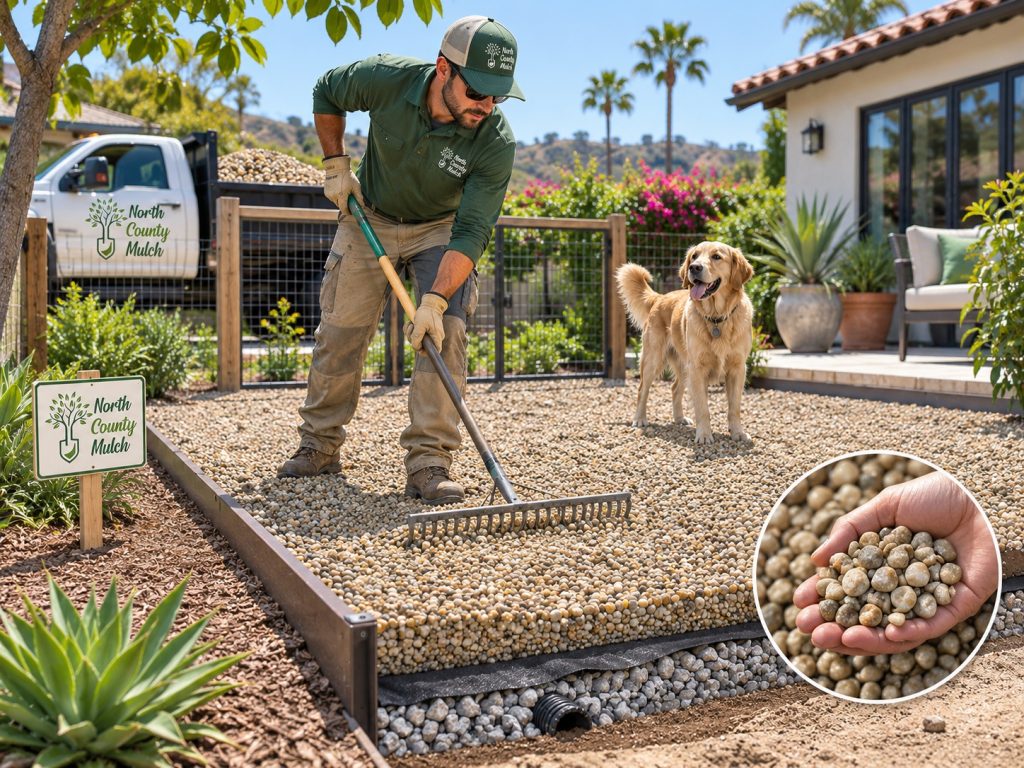
A properly designed drainage dog run needs a stable foundation and a way for rainwater to leave the area.
Step 1: Prepare the Ground
Remove grass, weeds, roots, and loose debris.
Inspect the existing soil for low spots or persistent saturation.
Step 2: Establish Drainage
Create a gentle grade that prevents standing water and directs runoff toward an appropriate drainage area.
Properties with dense soil may require additional subsurface drainage.
Step 3: Install a Stable Base
Place suitable compactable aggregate where site conditions require additional support.
We recommend compacting the base before installing the final gravel surface.
Step 4: Add Rounded Gravel
Spread approximately 2 to 3 inches of washed pea gravel, adjusting the depth for the dog’s needs and the construction design.
Use secure edging to reduce gravel migration.
Step 5: Provide Shade and Resting Areas
San Diego sunshine can heat exposed gravel.
Provide shade, accessible drinking water, and a comfortable resting surface rather than expecting dogs to lie on rock throughout the day.
Our gravel and granite products include pea gravel, crushed stone, decomposed granite, and other materials for residential landscaping projects.
How Much Gravel Do You Need for a Dog Run?
Use this formula:
Cubic Yards = Square Feet × Gravel Depth in Inches ÷ 324
For example, a 10 × 20-foot dog run covering 200 square feet requires:
200 × 3 ÷ 324 = 1.85 cubic yards
With a 10% allowance for leveling and material loss, plan for approximately 2 cubic yards.
This calculation covers the surface gravel only, not additional base materials.
How to Keep a Gravel Dog Run Clean and Comfortable
We recommend regular maintenance to help prevent odors, uneven surfaces, and paw irritation.
- Remove solid waste daily.
- Rake gravel to redistribute displaced stones.
- Remove leaves and organic debris.
- Address urine odors with appropriate pet-safe cleaning methods.
- Inspect drainage after heavy rainfall.
- Check surface temperatures during hot afternoons.
- Replenish gravel where coverage becomes thin.
The American Kennel Club recommends avoiding excessively hot walking surfaces and providing cooler, shaded alternatives during warm weather.
For homeowners considering DG alongside gravel, our related article, How to Install Decomposed Granite for Walkways & Patios, explains base preparation, compaction, and drainage.
Frequently Asked Questions
Is pea gravel safe for dogs?
Pea gravel can be suitable for many dogs because of its smooth, rounded edges. However, it should be avoided for dogs that chew or swallow stones.
Does pea gravel hurt dogs’ paws?
Properly sized rounded gravel is generally less abrasive than sharp crushed rock. Comfort depends on stone size, surface stability, and the individual dog.
Is decomposed granite good for dog runs?
DG can provide a firmer surface, but it may produce dust and retain odors. Proper grading and maintenance are essential.
How deep should gravel be in a dog run?
A 2 to 3-inch surface layer is a common starting point. Base depth and drainage requirements depend on soil and site conditions.
Does gravel prevent muddy dog yards?
Gravel can reduce surface mud when installed over a properly prepared, well-draining foundation. It cannot eliminate drainage problems caused by saturated underlying soil.
Build a Better Dog Run With North County Mulch
Choosing the best gravel for a dog run means balancing paw comfort, drainage, durability, and easy maintenance.
At North County Mulch, we supply pea gravel, decomposed granite, crushed stone, and other bulk landscaping materials throughout Escondido, Carlsbad, Oceanside, Poway, Fallbrook, and surrounding San Diego County communities.
Whether you’re replacing a muddy backyard section or building a dedicated dog exercise area, we can help estimate the materials needed.