
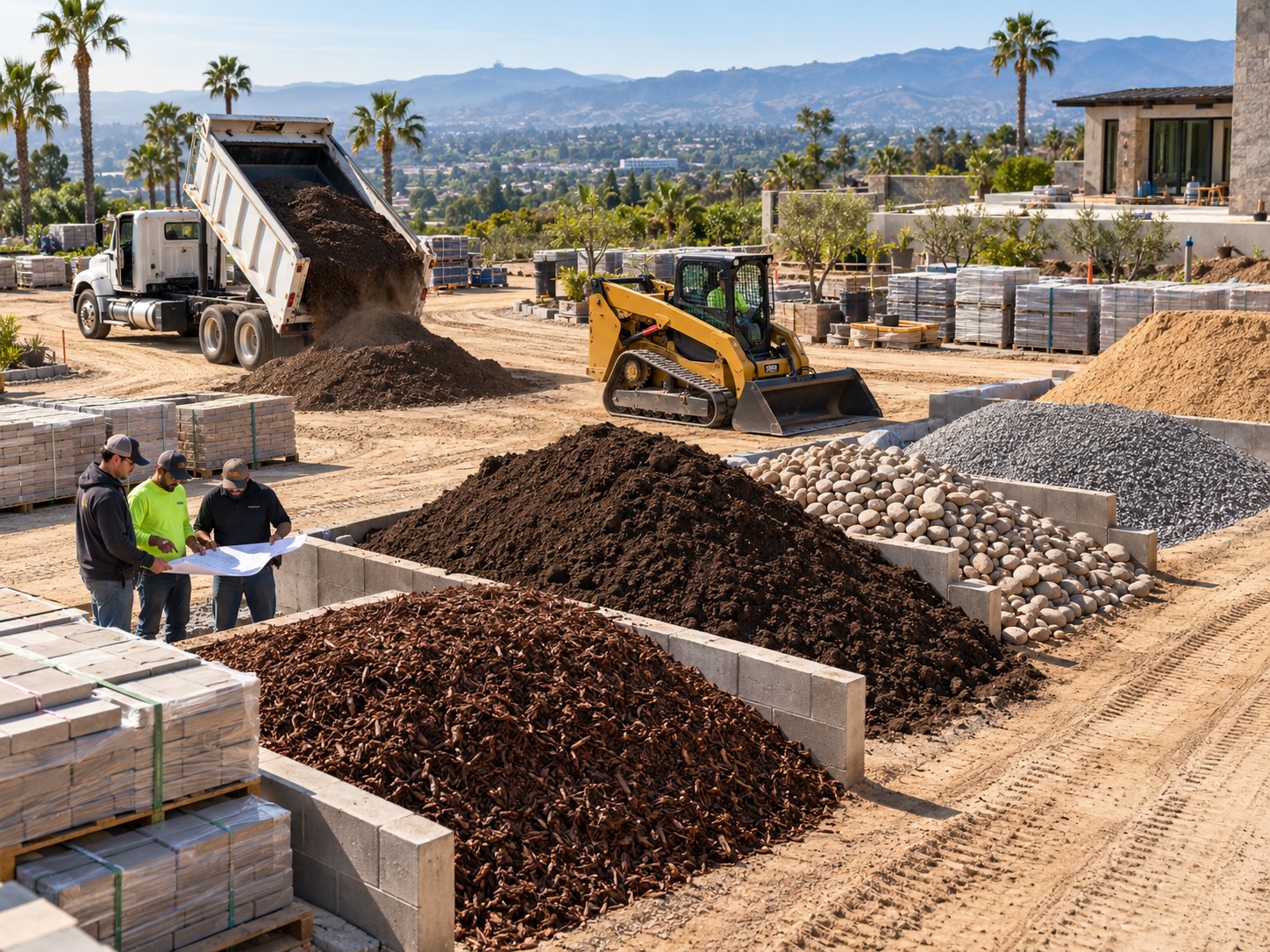
Landscape material staging means planning where mulch, soil, rock, sand, and base materials will be delivered, stored, and moved before installation begins. On large jobs, we recommend separating each material, keeping truck and equipment routes open, sequencing deliveries around the construction schedule, protecting soil and mulch from contamination, and placing heavy aggregates as close as practical to their installation areas.
On a large landscape job, ordering the correct material is only half the challenge.
The other half is getting several tons or cubic yards of mulch, topsoil, gravel, decomposed granite, sand, or Class 2 base onto the property without blocking crews, contaminating materials, or creating unnecessary machine travel.
At North County Mulch, we supply homeowners and professionals with bulk mulch, soil, sand, gravel, rock, and base materials from our Escondido yard. Large projects benefit from treating delivery and staging as part of the construction plan rather than an afterthought.
What Is Landscape Material Staging?
Landscape material staging is the process of deciding:
- Where bulk materials will be dumped
- When each material should arrive
- How materials will remain separated
- Which equipment will move them
- How crews and trucks will access the site
- Which materials should arrive first or last
- How much working space each stockpile needs
The goal is simple: reduce unnecessary material handling.
Every time soil, mulch, or rock must be moved twice, contractors spend more machine time, labor, and fuel.
Plan the Staging Area Before the First Delivery
Before ordering landscape contractor supplies, we recommend walking the site and identifying a dedicated staging zone.
A good location should account for:
Truck Access
The delivery route needs enough room for the delivery vehicle to enter, unload, and leave without interfering with active work.
Avoid staging materials where they block gates, driveways, equipment routes, dumpsters, or material deliveries scheduled later in the project.
Equipment Access
Think about how loaders, skid steers, wheelbarrows, and crews will reach the pile.
A material pile placed in an attractive empty corner may become inefficient if equipment needs to cross the entire project every time another bucket is needed.
Ground Conditions
Stable, reasonably level ground generally makes material handling easier than soft or steep areas.
Heavy rock and aggregate stockpiles deserve particular consideration because of their weight and the equipment needed to move them.
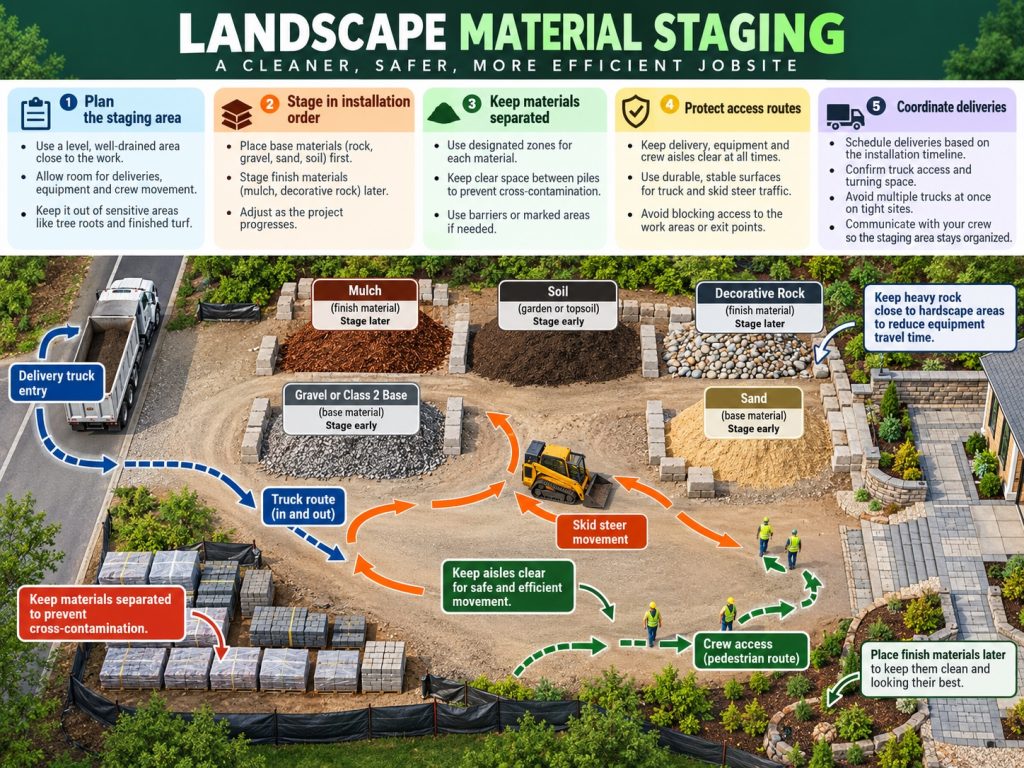
Stage Materials in Installation Order
Delivery sequencing can save a surprising amount of work.
For many large landscape and hardscape jobs, heavier structural materials are needed before finish materials.
A typical sequence might look like:
- Class 2 base or crushed rock
- Drainage gravel
- Sand or bedding material
- Topsoil or soil blends
- Decorative rock
- Mulch or bark
The exact order depends on the project.
For example, a paver installation may require compacted crushed rock or Class 2 base before screened bedding sand. North County Mulch’s hardscape guidance emphasizes constructing the structural base before the final bedding and surface layers.
Delivering decorative mulch too early can leave it exposed to dust, equipment traffic, and contamination while excavation work continues.
Keep Mulch, Soil & Rock Separated
Material contamination creates waste.
We recommend establishing clearly separated piles for:
- Mulch and bark
- Topsoil
- Compost blends
- Decorative gravel
- Drain rock
- DG
- Sand
- Class 2 base
Mixing soil into decorative rock makes cleanup difficult. Rock mixed into planting soil creates extra screening or removal work. Mulch contaminated with excavation spoil loses the clean appearance crews expect during final installation.
Physical spacing between piles is often worth more than trying to maximize every square foot of the staging area.
Protect Soil From Unnecessary Compaction
Bulk soil needs different handling from aggregate base.
Repeatedly driving equipment across topsoil stockpiles or finished planting areas can compact the material and make final grading harder.
North County Mulch carries screened topsoil, 50/50 soil, 80/20 blends, bioretention soil, and other materials intended for different planting and landscape applications.
We recommend keeping planting soil away from the primary truck route whenever the jobsite allows.
Stage Rock Close to Hardscape Areas
Rock, gravel, and base materials are dense.
Moving them long distances across a project can consume significant skid-steer or loader time.
If the job includes:
- Paver patios
- Retaining walls
- Dry creek beds
- Drainage work
- Walkways
- Parking areas
- DG paths
stage the appropriate aggregate as close to the work zone as safe access allows.
North County Mulch supplies gravel, granite, river rock, crushed stone, and DG for landscape, drainage, and hardscape applications throughout North County San Diego.
Do Not Block Future Work
One of the most common staging mistakes is placing material where another crew later needs to work.
Before approving a dump location, ask:
- Will irrigation trenches cross here?
- Does an excavator need this route later?
- Will concrete trucks need access?
- Is this where pavers will be installed?
- Will drainage need to cross the area?
- Does another delivery need this turnaround space?
Moving 15 yards of material because the pile is sitting over tomorrow’s trench is avoidable with a simple sequencing plan.
Keep Aisles and Equipment Routes Clear
Material staging is also a jobsite safety issue.
OSHA’s construction material-storage requirements state that aisles and passageways should remain clear for safe movement of employees and material-handling equipment. Stored materials should also be secured or managed so they do not create sliding, falling, or collapse hazards.
For landscape contractors, the practical takeaway is straightforward: do not turn the staging zone into an obstacle course.
Coordinate Deliveries Instead of Receiving Everything at Once
A large project may require dozens of cubic yards of different materials.
Receiving every product on day one can overwhelm the available staging area.
Staggering deliveries can help contractors:
- Keep stockpiles smaller
- Preserve equipment access
- Reduce cross-contamination
- Keep finish materials cleaner
- Adjust quantities as the project develops
- Reduce unnecessary double handling
North County Mulch provides bulk landscape material delivery for both small and large projects throughout the North County region, including soil, rock, sand, gravel, mulch, and bark.
Plan bulk landscape material delivery with North County Mulch
Calculate Quantities Before Scheduling Trucks
Accurate material quantities improve staging.
For mulch, North County Mulch uses:
Length × Width × Depth ÷ 324 = Cubic Yards Needed
For example, a 1,000-square-foot landscape bed at a 3-inch depth requires about 9.25 cubic yards of mulch.
Base materials need calculations based on final depth and compaction requirements, not just the visual size of the pile.
Adding a reasonable project overage for grading corrections, edges, cuts, and normal material loss can also prevent small emergency deliveries near the end of the job.
Better Staging Keeps Large Jobs Moving
Landscape material staging is not complicated, but poor planning can create expensive delays.
We recommend organizing large projects around three questions:
What material is needed first? Where can it be dumped without blocking future work? How many times will crews need to move it before installation?
At North County Mulch, we supply landscape contractors with mulch, topsoil, compost blends, sand, DG, gravel, rock, and Class 2 base from one local Escondido source.
Planning materials and deliveries before equipment arrives can keep crews productive and help large projects move from excavation through final mulch without unnecessary handling.
Frequently Asked Questions
Where should landscape materials be staged?
Use a stable, accessible area that does not block truck routes, equipment movement, future excavation, or finished work.
Should mulch and soil be delivered at the same time?
They can be, but large jobs often benefit from sequencing deliveries. Soil may be needed during grading while mulch is usually a finish material.
How should contractors stage decorative rock?
Keep decorative rock separate from soil, mulch, and excavation spoil, preferably close to the installation area while maintaining equipment access.
What landscape contractor supplies can be delivered in bulk?
Common bulk materials include mulch, bark, topsoil, compost blends, sand, gravel, DG, decorative rock, and Class 2 base.
Why does staging matter on large landscaping jobs?
Good staging reduces double handling, machine travel, contamination, blocked access, and delays between phases.