
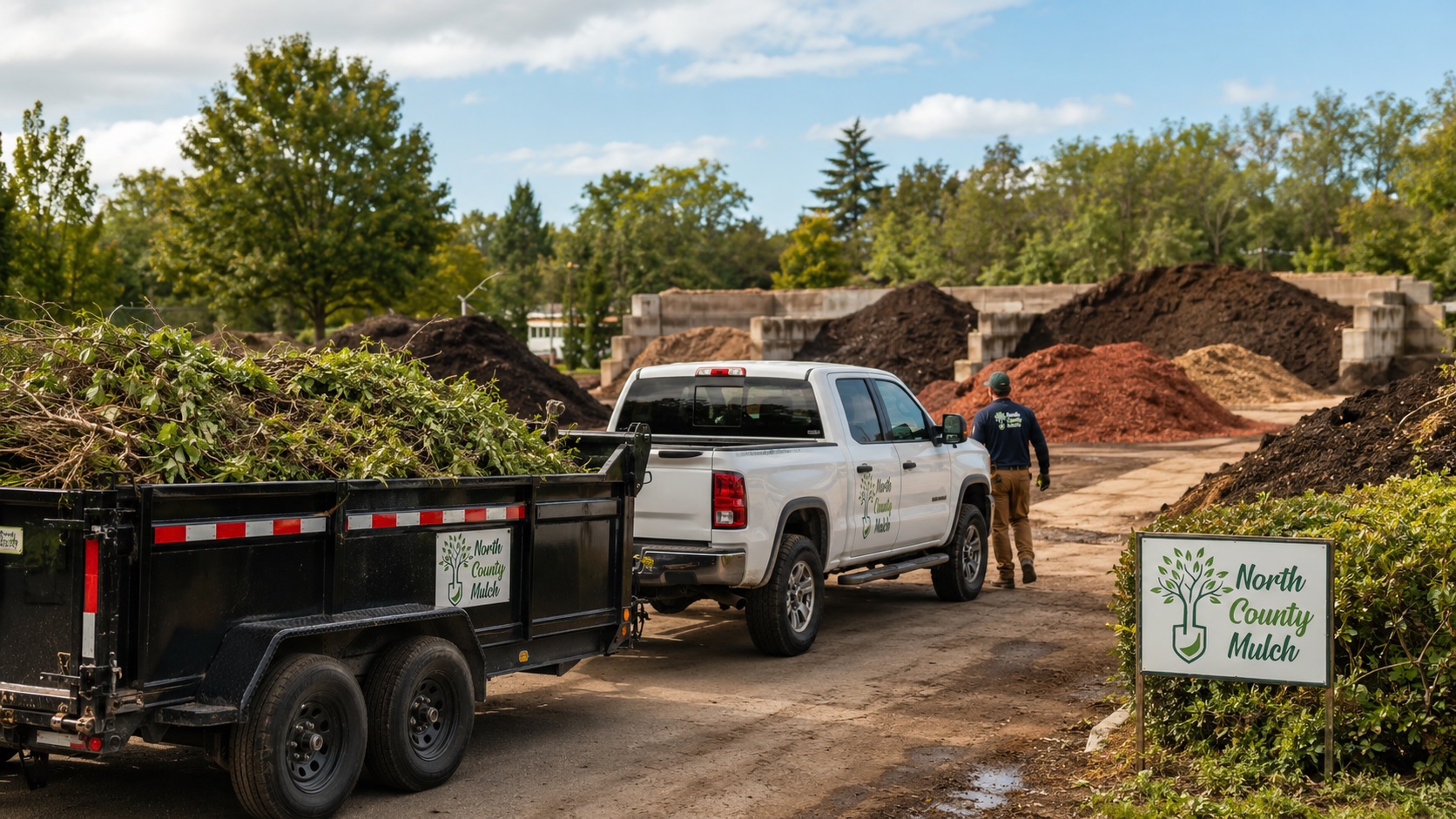
For independent landscapers, profit often disappears between jobs.
A crew finishes a cleanup, fills the truck with branches, leaves, grass, sod scraps, old mulch, and clean yard debris, then loses half the day driving around for organic waste disposal. After that, the same truck may still need to reload with mulch, compost, bark, or topsoil before the next stop.
That wasted loop costs fuel, payroll, tipping fees, and schedule control.
At North County Mulch, we help local landscape crews work smarter by connecting clean yard waste dumping, landscape material pickup, mulch, compost, topsoil, and delivery support in one practical workflow. North County Mulch offers yard waste disposal, landscape debris removal, commercial waste hauling, and dumping services for projects in Escondido and the North County San Diego area.
The green loop is simple: unload clean green waste, clear the truck, reload with premium materials, and get back to paid work faster.
Why Dump Runs Drain Landscape Business Margins
Every landscaper knows the job is not finished when the last shrub is trimmed. The debris still has to go somewhere.
A basic dump run may look small on paper, but the real cost includes:
- Crew time behind the windshield
- Fuel and vehicle wear
- Lost production hours
- Waiting time at disposal sites
- Tipping fees
- Extra mileage between supply yards and dump locations
- Delayed arrival at the next job
- Trucks loaded with debris instead of revenue-producing materials
When that happens several times per week, the lost margin adds up.
For small landscape companies, the truck is often the business. When that truck is tied up with waste, it cannot haul mulch, compost, plants, tools, or crew members efficiently. A smarter material dumping plan helps protect daily production capacity.

What the Green Loop Means for Local Landscapers
The green loop is a more efficient way to manage landscape materials.
Instead of treating debris disposal and material supply as two separate trips, crews combine both needs into one stop.
A clean workflow can look like this:
- Finish a cleanup, pruning job, mulch removal, or bed renovation.
- Load clean yard debris into the truck or trailer.
- Search for green waste dumping near me and head to a central local facility.
- Drop off approved clean organic material.
- Reload with compost, dyed mulch, shredded mulch, bark, or topsoil.
- Head directly to the next job.
That one-trip model supports sustainable landscaping practices and better field efficiency. North County Mulch already positions waste removal as a way to reduce multiple trips and support cleaner project areas.
Organic Waste Disposal That Works With the Job Schedule
Independent landscapers need disposal options that match real jobsite timing.
A typical day may include:
- Morning lawn cleanup
- Midday hedge trimming
- Afternoon mulch install
- Emergency debris pickup after wind
- Seasonal leaf and branch removal
- Bed prep before new planting
- Commercial property refresh
A facility that handles yard waste and also supplies landscape materials can simplify the schedule. Instead of sending one truck to dump debris and another to pick up mulch, the same crew can clear out and reload.
How Material Dumping Services Save Fuel
Fuel cost is one of the easiest expenses to underestimate.
A truck pulling a loaded trailer burns more fuel than an empty truck. Long disposal routes increase that cost further. When crews travel from jobsite to landfill, then to a material yard, then back across town, the route becomes inefficient.
A central stop can reduce wasted driving.
For example, a landscaper completing a cleanup near Escondido can drop clean yard debris, then reload with compost, topsoil, shredded mulch, or bark products before heading to the next project. North County Mulch’s compost blends are designed to enrich soil and support gardens, lawns, raised beds, and commercial landscaping projects across San Diego.
That kind of route planning helps reduce unnecessary miles and keeps trucks productive.
How Cheap Yard Waste Drop Off Can Improve Job Pricing
Many landscape business owners price labor, materials, and disposal separately. But disposal often gets estimated too loosely.
When yard waste drop off is expensive, slow, or far away, the crew may lose margin even when the job was priced well.
A better pricing model includes:
- Estimated debris volume
- Load type
- Travel time
- Disposal destination
- Reload needs
- Material pickup timing
- Labor hours for unload and reload
- Fuel cost by route
The goal is not only finding cheap yard waste drop off. The goal is finding the best total cost per completed job.
A facility that helps with dumping and material supply can create value beyond the disposal fee. It can reduce route time, clear trucks faster, and keep crews moving toward billable work.
Turn Clean Debris Into the Next Revenue Opportunity
Green waste should not be treated as a dead-end task. It can become the reset point between jobs.
Once debris is unloaded, the truck is available again. That open capacity creates options:
- Reload with dyed mulch for a property refresh
- Pick up compost for soil improvement
- Load topsoil for lawn repair
- Grab bark for slope coverage
- Prepare for the next installation
- Keep the crew on schedule without returning to the shop
Which Materials Should Landscapers Reload With?
The best reload depends on the next job.
Dyed Mulch for Curb Appeal
Use dyed mulch when a client wants a bold, refreshed look for front beds, commercial entrances, HOA properties, or rental homes before showing or leasing.
Shredded Mulch for Performance
Use shredded mulch when the job needs moisture retention, soil temperature support, and weed suppression. North County Mulch notes that shredded mulch helps retain moisture, regulate soil temperature, and suppress weeds.
Compost for Soil Health
Use compost before planting, overseeding, garden refreshes, raised beds, or soil-building projects. Compost gives landscapers a value-added service that goes beyond surface appearance.
Topsoil for Grading and Repair
Use topsoil for lawn repair, grade correction, planting areas, and fill where quality soil matters. North County Mulch offers topsoil services in Escondido and lists its pickup address on North Centre City Parkway.
Bark Products for Durable Coverage
Use walk-on bark, small bark, medium bark, or gorilla hair mulch for pathways, slope coverage, natural beds, and water-conscious landscapes.
Sustainable Landscaping Practices That Clients Notice
Customers are paying more attention to sustainability.
That does not mean every client asks technical questions about waste streams. But they do notice when a landscaper works cleanly, reduces waste, uses organic soil amendments, and recommends materials that support healthier landscapes.
Sustainable landscaping practices can include:
- Dropping off clean yard debris responsibly
- Using compost to rebuild depleted soil
- Choosing mulch to reduce evaporation
- Reusing natural organic materials where appropriate
- Reducing unnecessary trips
- Keeping debris out of client driveways and streets
- Planning smarter material routes
North County Mulch describes walk-on bark as environmentally friendly and made from natural materials that decompose over time, adding organic matter and supporting healthy soil ecosystems.
That gives local landscapers a practical talking point when explaining why material choices matter.
How Dumping Services Help With Crew Management
Crew management depends on clear systems.
Without a dumping plan, crew leaders often make decisions in the field:
“Where should this load go?”
“Can the trailer hold one more job?”
“Should the crew dump now or after lunch?”
“Who is picking up mulch?”
“Will the truck be empty before the install?”
Those questions slow the day down.
A defined green loop gives crews a repeatable plan. Finish the job, haul approved clean debris, drop off, reload, move to the next project. That reduces decision fatigue and helps newer crew members follow the process.
North County Mulch also offers roll-off dumpsters for landscaping projects where multiple landfill trips would be time-consuming and costly.
When Roll-Off Bins Make More Sense
Not every job should rely on truck dumping.
For larger cleanouts, commercial renovations, estate cleanups, HOA work, or construction-adjacent landscape jobs, a roll-off bin may be more efficient.
A roll-off bin can help when:
- Debris volume is too large for one truck
- The project spans multiple days
- The crew needs to keep working without leaving the site
- Several trades are generating waste
- Site cleanup must stay organized
- The client wants a cleaner work zone
Then, once the job is ready for finish work, crews can order or pick up mulch, compost, bark, or topsoil for the final installation.
Build a More Profitable Landscape Route
A profitable route starts before the truck leaves the yard.
For each day, ask:
- Which jobs will create green waste?
- Which jobs need new landscape materials?
- Can disposal and material pickup happen in one stop?
- Which crew should handle the reload?
- Which materials should be staged first?
- Will the trailer be empty before the next install?
- Can delivery save more time than pickup?
This level of planning turns logistics into profit control.
North County Mulch offers pickup and delivery options for certain materials, including bark and mulch products, which gives landscapers more flexibility when deciding whether to reload directly or schedule delivery to the jobsite.
The Margin Formula: Less Idle Time, More Billable Work
The numbers are simple.
Less time dumping means more time installing. Less fuel wasted means more profit kept. Fewer route gaps mean tighter schedules. Cleaner trucks mean faster reloads. Better materials mean stronger finished results.
For independent landscapers, material dumping services are not just a convenience. They are part of a smarter operating system.
A green loop can improve:
- Daily route efficiency
- Crew utilization
- Truck capacity
- Disposal predictability
- Material availability
- Client satisfaction
- Sustainable brand positioning
- Jobsite cleanup speed
- Overall margin
Closing the Green Loop With North County Mulch
The best landscape crews do not only install good work. They manage materials well.
Clean yard debris has to leave the job. Premium mulch, compost, bark, and topsoil have to arrive. When those two needs are handled through one efficient local loop, the business becomes easier to run.
At North County Mulch, we support local landscapers with yard waste dumping, landscape project dumping, roll-off bins, and premium landscape materials that help crews move from cleanup to installation faster.
For landscape business owners searching for organic waste disposal, green waste dumping near me, cheap yard waste drop off, or better sustainable landscaping practices, the smarter answer is a local green loop built around speed, material quality, and better margins.
Visit North County Mulch to plan your next disposal and reload stop.
FAQs
What is green waste dumping?
Green waste dumping is the drop off or disposal of clean organic landscape debris such as leaves, branches, grass clippings, plant material, and yard cleanup debris. Accepted materials can vary, so landscapers should confirm details before arriving.
How can landscapers save money with material dumping services?
Landscapers can save money by reducing fuel use, cutting extra trips, clearing trucks faster, and combining debris drop off with material pickup. The biggest savings often come from better route efficiency.
Why should landscapers reload materials after dumping?
Reloading after dumping turns a disposal stop into a productive supply stop. A crew can drop clean yard debris, then load mulch, compost, bark, or topsoil for the next job.
What materials should landscapers pick up after dumping yard waste?
Common reload materials include dyed mulch, shredded mulch, compost, topsoil, walk-on bark, small bark, medium bark, and gorilla hair mulch. The right choice depends on the next project.
Are material dumping services useful for small landscape companies?
Yes. Small landscape companies often depend on one or two trucks. Clearing debris quickly helps protect truck capacity, schedule control, and daily production.