
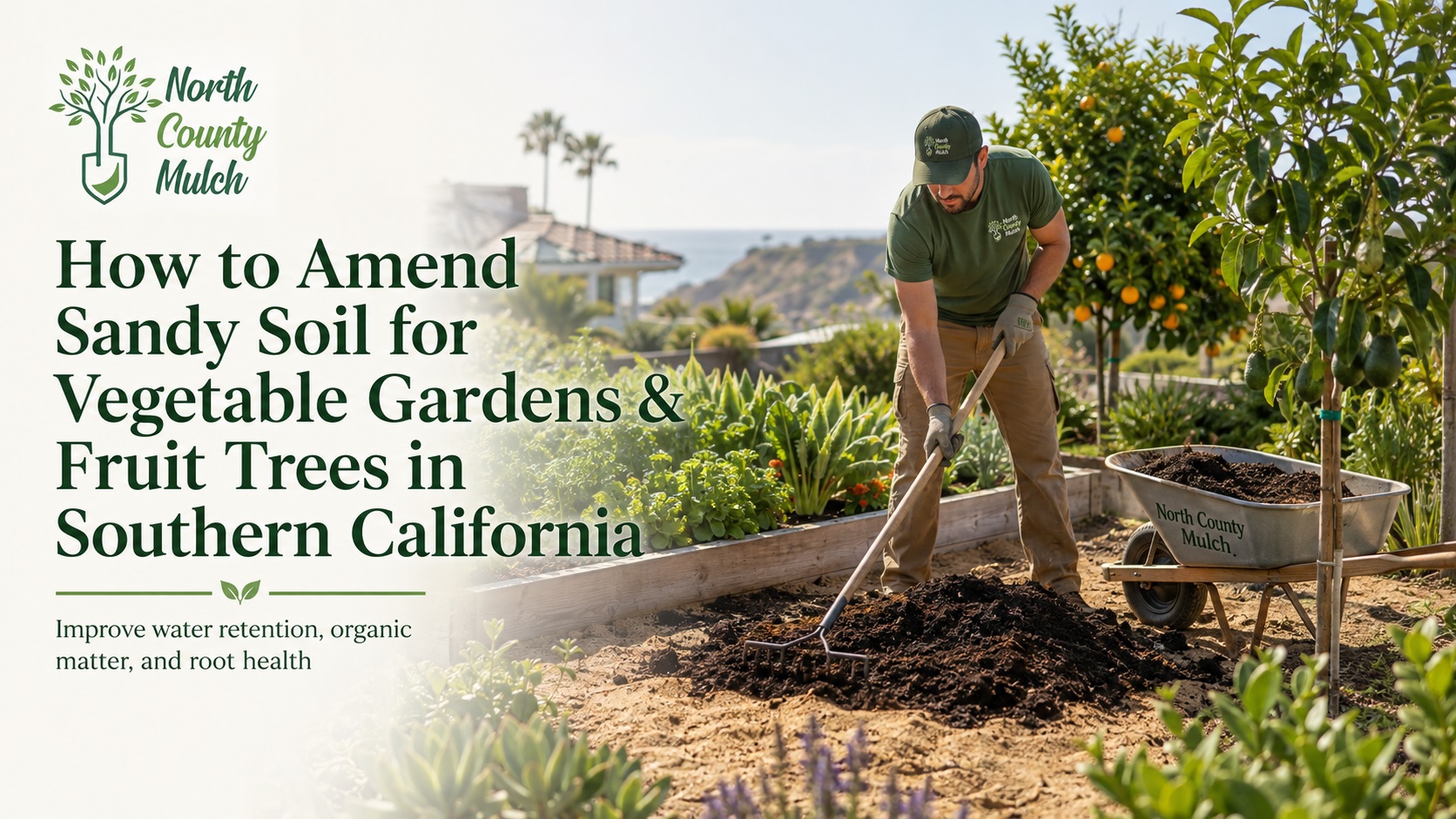
To fix sandy soil for vegetables, citrus, avocados, and other fruit trees in Southern California, add stable organic matter rather than replacing the soil entirely. For vegetable beds, work finished compost throughout the planting zone to increase moisture and nutrient retention. Around established fruit trees, build organic matter across the wider root zone and use surface mulch rather than concentrating rich amendment inside one planting hole. Sandy soils naturally hold less water and fewer nutrients than finer-textured soils, while compost can improve water-holding capacity, soil structure, and nutrient retention.
At North County Mulch, we often talk about San Diego’s heavy clay, but coastal and sandy North County properties can create the opposite problem. Water disappears quickly, fertilizer moves beyond active roots, and vegetable beds can seem dry again shortly after irrigation.
The answer is not making sandy soil stop draining. The goal is building enough organic matter into the root zone to slow water and nutrient loss while preserving the drainage that citrus, avocados, and vegetables need.
Why Sandy Soil Can Be Hard on Southern California Gardens
Sand has relatively large soil particles and less surface area for holding moisture and plant nutrients than finer-textured soils. UC Cooperative Extension notes that coarse-textured soils generally have lower nutrient and water-holding capacity than finer soils.
That can create several familiar problems:
- Vegetable beds drying rapidly
- Frequent irrigation requirements
- Fertilizer leaching below shallow roots
- Weak organic matter levels
- Uneven growth after feeding
- Newly planted areas requiring constant attention
Adding decomposed organic matter helps sandy soils retain more water while improving overall soil structure. UC Master Gardener guidance specifically recommends compost, aged manure, and other decomposed organic matter for sandy soils because these materials increase water-holding capacity.
How to Fix Sandy Soil for a Vegetable Garden
For gardeners searching how to fix sandy soil, compost should be one of the first materials considered.
For a new vegetable bed, spread about 2 to 4 inches of finished compost over the prepared area, then blend it into roughly the upper foot of soil. UC Master Gardeners recommend this approach when preparing a vegetable bed for the first time, followed by smaller annual compost additions as the organic material breaks down.
A practical process looks like this:
- Remove weeds and old plant debris.
- Loosen the existing sandy soil.
- Spread finished compost evenly.
- Blend compost through the active root zone.
- Level the bed before planting.
- Add mulch after seedlings become established.
For amending sandy soil for vegetables, avoid creating isolated pockets of pure compost. We want roots growing through a broad, balanced soil profile.
Our organic compost products are suitable for vegetable gardens, raised beds, fruit trees, lawn preparation, and broader soil rebuilding projects. North County Mulch also offers bulk delivery throughout San Diego County.
Compost Helps Sandy Soil Hold Water Longer
Organic matter acts differently from sand.
While water moves quickly through coarse mineral particles, decomposed organic material helps retain moisture and nutrients within the root zone. UC guidance notes that compost improves sandy soil’s ability to hold water, while soil organic matter can also help retain nutrients that might otherwise leach more readily through coarse soil.
That matters across North County during warm, dry weather.
More moisture retention does not mean keeping roots constantly wet. It means giving irrigation more time to remain available where plants can use it.
For more detailed California guidance, see the UC Master Gardener Program’s soil amendment recommendations.
Best Soil Amendment for Citrus Trees
When searching for the best soil amendment for citrus trees, avoid thinking only about what goes directly into the planting hole.
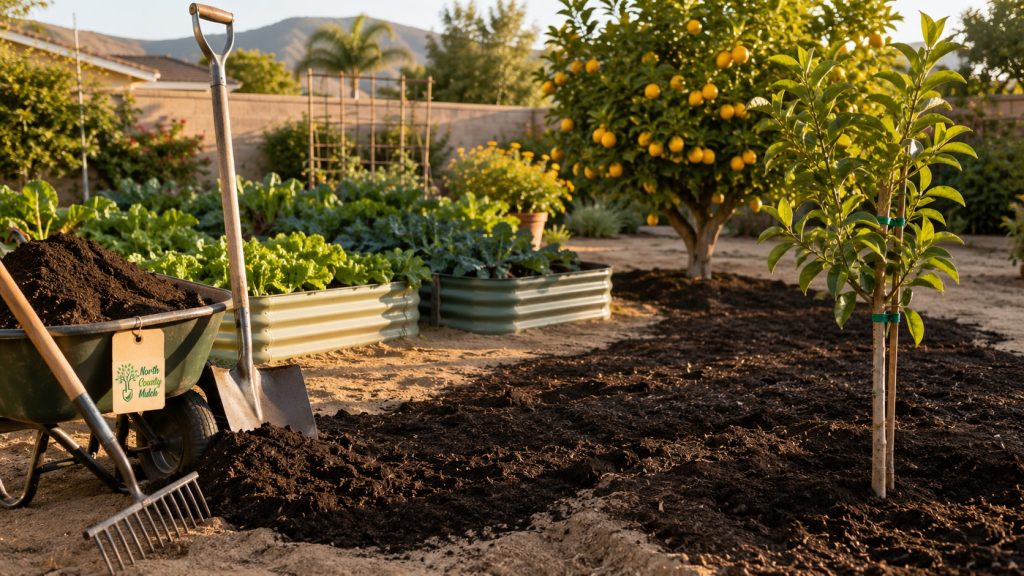
For established citrus growing in sandy or depleted ground, compost can be used to gradually build organic matter across the surrounding root zone. Organic matter contributes to nutrient retention, moisture management, and improved soil structure.
For a new tree, however, heavily amending only the planting hole can create an abrupt difference between amended soil and native soil. UC guidance generally recommends improving the broader planting area rather than creating a small pocket of unusually rich soil around perennial roots.
Think wide rather than deep.
What About Avocado Trees?
Avocados deserve extra care because good drainage remains critical.
Sandy soil can actually provide an advantage when drainage is good, but low moisture and nutrient retention may still limit tree performance. Organic matter can help improve water and nutrient retention, while surface organic mulch can reduce evaporation and support the shallow root environment around avocado trees.
Do not assume more compost automatically means better avocado soil. UC research evaluating amended avocado planting holes found no clear growth advantage from larger amended holes under the tested conditions.
For avocado and citrus, soil improvement should support drainage, not fight against it.
Compost vs. Topsoil for Sandy Ground
Compost and topsoil solve different problems.
Compost adds organic matter, helps improve moisture retention, and supports soil biology.
Topsoil adds mineral soil volume and can help when building raised beds, replacing poor fill, or reshaping planting areas.
For severely sandy garden areas, a blend can provide more structure than compost alone.
North County Mulch’s related guide, The Nitrogen Math: When to Mix Coffee Compost with Premium Topsoil for High-Yield Fruit Trees, covers blending compost and topsoil for citrus, avocado, raised beds, and depleted planting areas.
Build Better Soil Instead of Fighting the Sand
Southern California sandy soil does not need to become clay.
Vegetable beds need more organic matter throughout the growing zone. Citrus and avocado areas benefit from better moisture and nutrient retention without sacrificing drainage. Repeated compost additions can gradually improve the soil rather than relying on one oversized amendment application.
At North County Mulch, our approach is simple: improve the soil environment first, then give roots the water and nutrients they need to perform.
Order organic farm compost and soil amendments in bulk for vegetable gardens, citrus trees, avocados, raised beds, and other North County planting projects.