
Can You Put New Mulch Over Old Mulch? When to Refresh vs. Remove It
Yes, you can put mulch over old mulch when the existing material is thin, loose, draining properly, and free from major problems. Before adding fresh mulch, rake the old layer and measure the total depth. If old mulch is already too deep, badly compacted, sour-smelling, or preventing water from reaching the soil, remove or thin it first. For most planting beds, the goal is to maintain an appropriate total mulch depth rather than adding another full layer every year. University of California guidance generally recommends about 2 to 4 inches of organic mulch while keeping it away from trunks and woody stems.
At North County Mulch, we often see San Diego landscapes where perfectly usable mulch gets removed simply because the surface has faded. In many cases, a good raking and a light top-dressing can refresh mulch beds without starting over.
Can You Put Mulch Over Old Mulch?
Yes, and in many landscapes that is the better approach.
Organic bark and wood mulch gradually weather and decompose. The top surface may turn gray or look worn while material underneath still provides useful soil coverage. Rather than automatically removing everything, we recommend checking the condition and depth of the existing layer first.
Season after season of adding full layers without checking depth can eventually create excessive mulch. Penn State Extension specifically advises checking existing depth before replenishing mulch because repeatedly putting new mulch over old material can create the same problems as applying too much at once.
For San Diego properties, homeowners can explore our bulk mulch options from North County Mulch when a bed needs new material for moisture protection, weed suppression, slope coverage, or a cleaner finished appearance.
When Should We Add Fresh Mulch Over the Old Layer?
Before adding fresh mulch, pull back a small section and check the depth with a ruler or garden trowel. We are looking for a bed that still drains properly and has enough room for another light layer.
Adding new material usually makes sense when the old mulch is less than the desired final depth, has decomposed noticeably, still feels loose, and allows irrigation water to reach the soil.
For example, if only about an inch of mulch remains, adding another inch or two may restore coverage without disturbing the existing material. The older organic material can continue decomposing underneath.
UC Master Gardener guidance recommends maintaining roughly 2 to 4 inches of organic mulch and leaving space around trunks and woody stems.
When Should You Remove Old Mulch?
Homeowners do not need to remove old mulch every year. There are situations, however, where thinning or removing part of the existing layer is worthwhile.
Watch for these conditions:
- Mulch is already excessively deep
- The surface has formed a hard, matted layer
- Irrigation water pools or runs across the mulch instead of soaking through
- Mulch has accumulated against tree trunks or plant stems
- The material smells sour or unusually fermented
- Weeds and soil have become heavily mixed into the old layer
- A problematic fungal growth or contaminated section needs to be removed
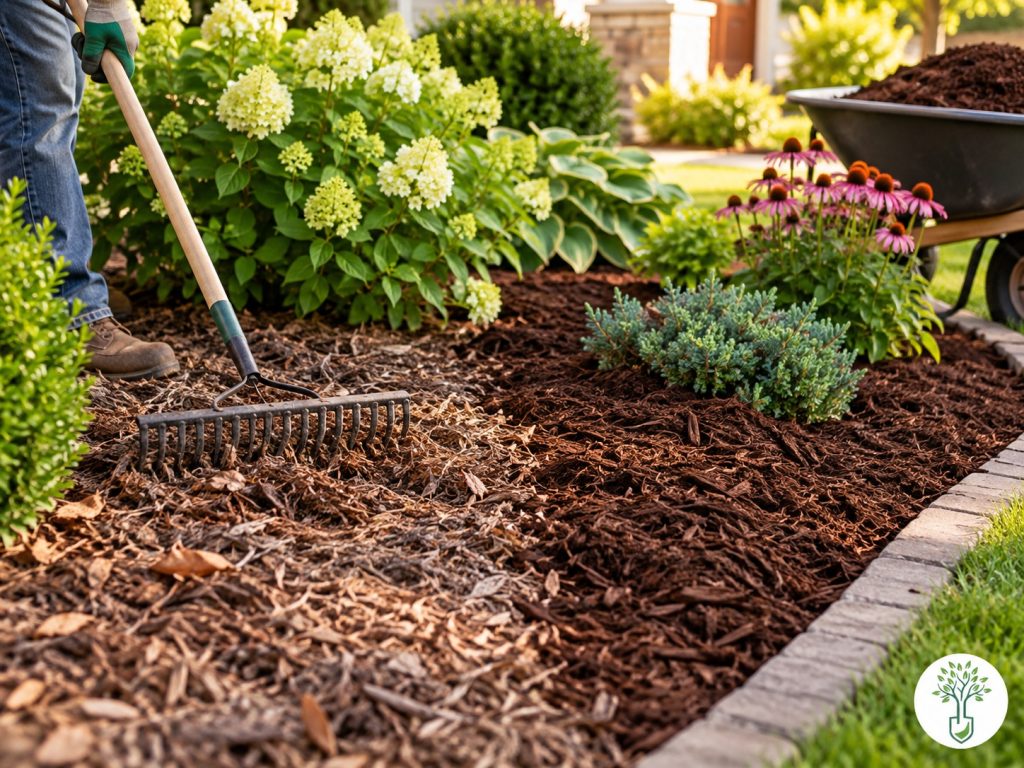
Slightly matted mulch does not always need replacement. Penn State Extension notes that old mulch can often be refreshed simply by breaking apart matted material with a rake.
How We Refresh Mulch Beds
A successful mulch refresh starts with the material already on the ground.
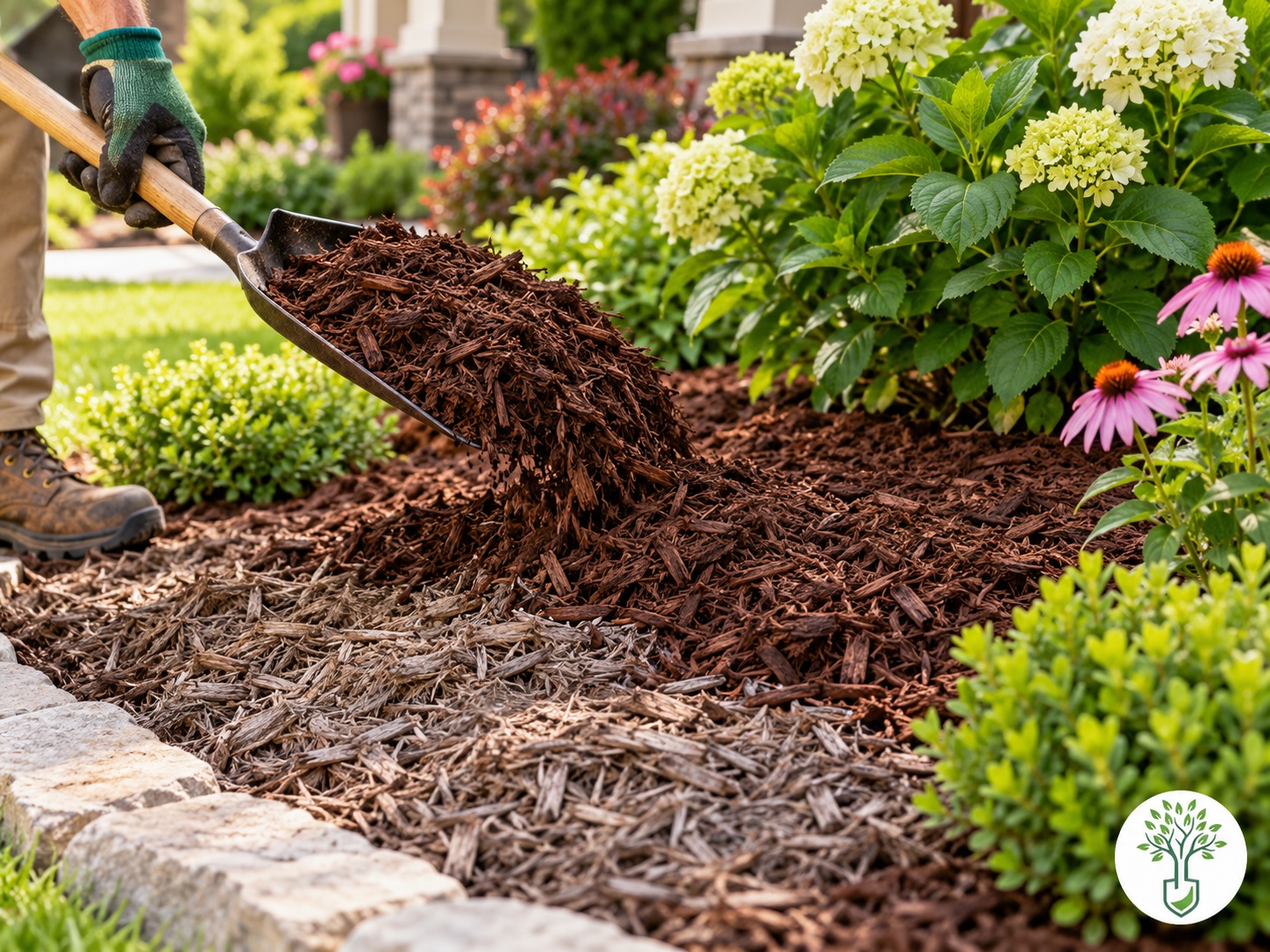
First, we rake through the old layer to loosen compacted areas and expose faded mulch underneath. We also remove leaves, weeds, branches, and debris. Any mulch piled against stems or trunks should be pulled back.
Next, check the existing depth. If plenty of mulch remains, a full new layer is unnecessary. A thinner top-dressing may be enough to restore color and create a uniform finish.
When more coverage is needed, spread the fresh material evenly rather than creating hills around plants. The goal is consistent coverage across the soil surface.
For a deeper guide to evaluating existing material, see our related article on how to refresh old mulch and decide whether to layer over or remove it.
Why Keeping the Right Mulch Depth Matters in San Diego
Mulch has a bigger job than improving curb appeal. Properly applied organic mulch helps reduce evaporation, suppress weeds, moderate soil temperatures, and protect exposed soil.
Those benefits are especially valuable across Escondido and San Diego County, where landscapes regularly deal with heat, dry weather, irrigation demands, and intense sun.
More mulch is not automatically better, though. A maintained layer protects the soil, while excessive accumulation can interfere with water movement and create unnecessary moisture around stems and trunks.
That is why we recommend measuring before every seasonal refresh.
Should Old Mulch Be Mixed Into the Soil?
Usually, no.
Wood mulch works best as a surface covering. Mixing large amounts of partially decomposed wood directly into planting soil can change how that soil behaves during decomposition.
Instead, we prefer leaving usable mulch on the surface, raking it loose, and adding only enough new material to restore the desired depth.
Refresh Instead of Automatically Replacing
So, can you put mulch over old mulch? Absolutely, provided the existing layer is still performing well.
At North County Mulch, we recommend inspecting before replacing. If the old material is thin and loose, rake it and top-dress with fresh mulch. If the bed is overly deep, compacted, or poorly draining, remove enough material to correct the problem before adding anything new.
That approach helps homeowners refresh mulch beds efficiently while getting more value from material already in the landscape.