
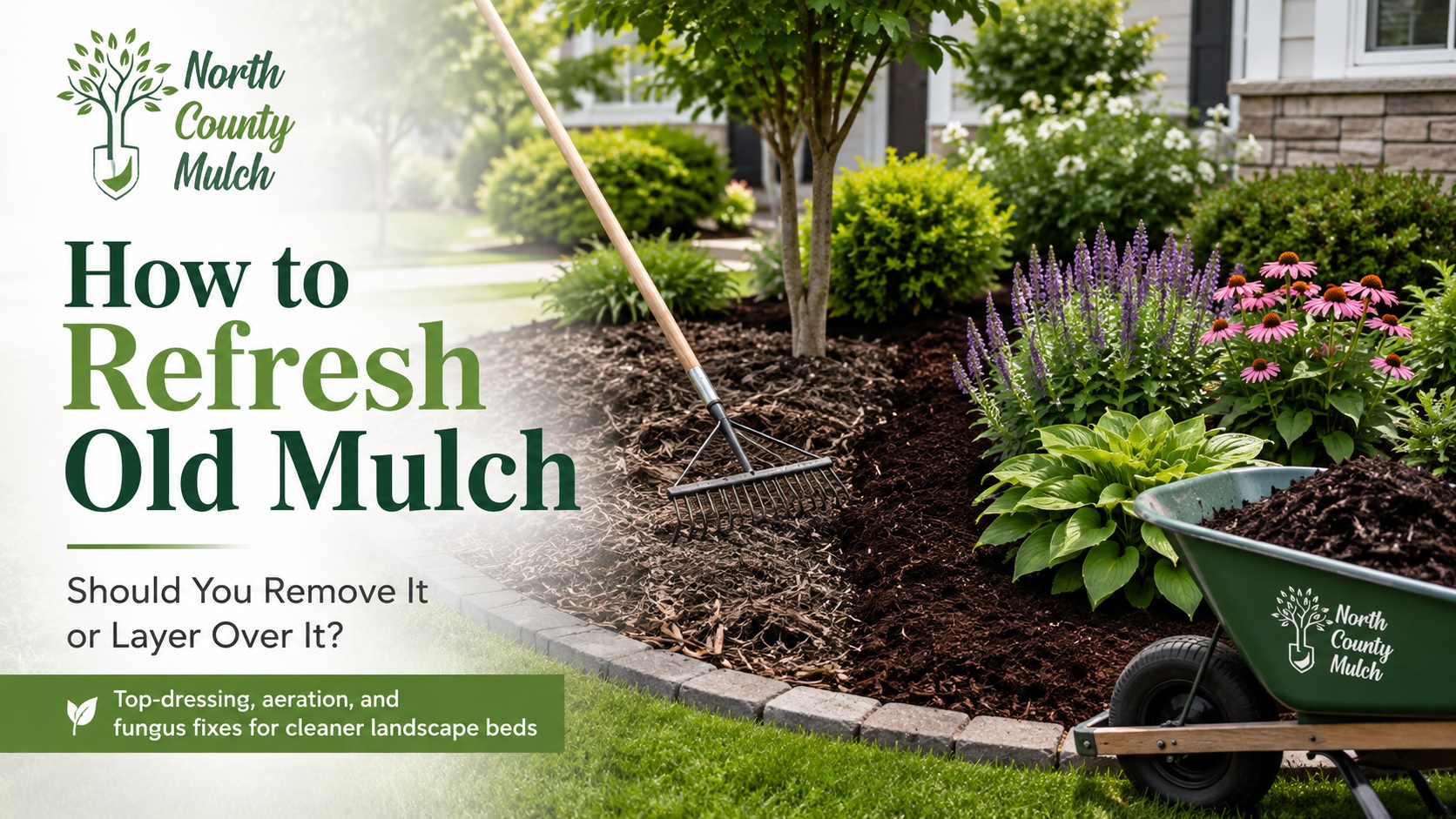
Yes, you can put new mulch over old mulch when the existing layer is thin, loose, and still draining well. Do not keep stacking mulch if the bed already has 2 to 3 inches, feels compacted, smells sour, or has artillery fungus near siding, windows, or cars. The better refresh method is to rake and loosen the old layer, remove problem areas, then top-dress with 1 to 2 inches of fresh mulch for a clean spring or fall reset. Extension guidance notes that mulch should generally stay around 2 to 3 inches total, and compacted mulch should be broken up so air and water can reach the soil.
Why Old Mulch Fades
Mulch fades because sun, water, dust, irrigation, foot traffic, and natural breakdown change the surface color. That does not always mean the bed needs a full replacement.
At North County Mulch, we help San Diego homeowners, landscapers, HOAs, and contractors refresh mulch beds without wasting good material. Our mulch products are built for San Diego’s dry climate, sloped yards, garden beds, parkways, playgrounds, and commercial landscapes.
Can You Put New Mulch Over Old Mulch?
Yes, but only after checking the old layer. The question is not just “can you put new mulch over old mulch.” The better question is whether the old mulch still supports healthy soil.
Layer over old mulch when:
- Total depth is less than 2 inches
- Mulch is loose and breathable
- Water still reaches the soil
- No sour odor is present
- No major fungus issue is near structures
- Plant crowns and tree trunks are clear
Remove or thin old mulch when:
- Total depth is already 3 inches or more
- The layer is matted or compacted
- Water runs off instead of soaking in
- Mulch touches trunks, stems, siding, or weep screeds
- Artillery fungus is active near cars, walls, or windows
How to Refresh Faded Mulch Step by Step
Step 1: Rake the Old Layer
Use a landscape rake to loosen compacted mulch. This restores air movement and helps water pass through.
Step 2: Pull Mulch Away From Plants
Keep mulch away from tree trunks, shrub stems, and building edges. UConn Extension warns that piling mulch too deep or against trunks can damage plant tissue, and 2 to 3 inches is enough for most landscape purposes.
Step 3: Remove Problem Spots
Remove wet, sour, matted, or fungus-heavy pockets. This is especially important near stucco, siding, windows, white walls, and parked vehicles.
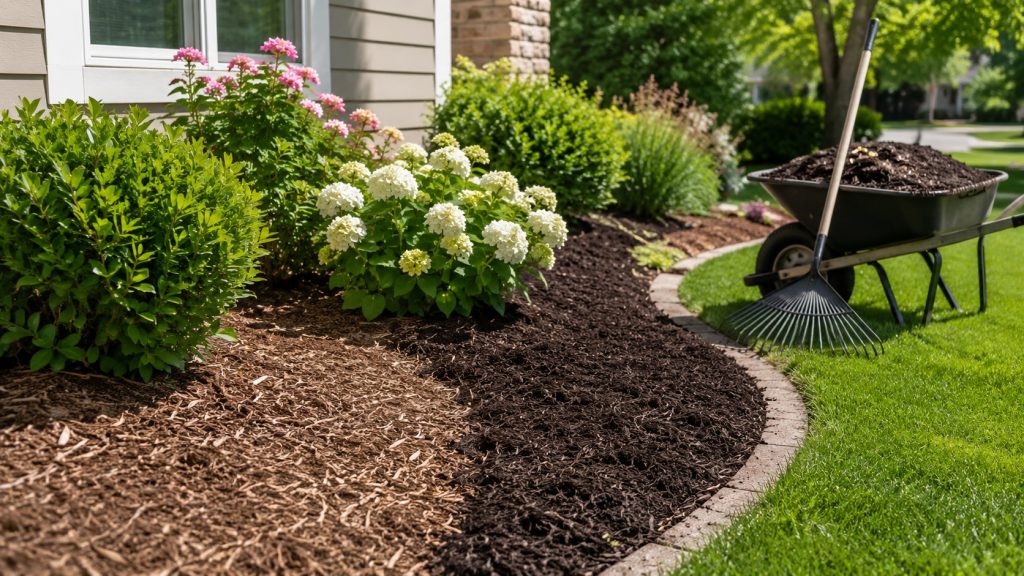
Step 4: Add 1 to 2 Inches of Fresh Mulch
Top-dress only enough to restore color and coverage. North County Mulch notes that most decorative beds perform well with a 2 to 3 inch layer, so the new layer should bring the bed back to that range, not exceed it.
Step 5: Water Lightly
A light watering settles the fresh top layer and helps reduce dust.
Fungus on Mulch Fix: What to Do About Artillery Fungus
Most fungi in mulch are part of natural decomposition. Some, like slime mold or bird’s nest fungus, can usually be raked away. Artillery fungus is different because it can shoot sticky black spores onto siding, cars, and foundations, where removal can be difficult.
For a fungus on mulch fix, we recommend:
- Remove the worst contaminated mulch near structures
- Rake remaining mulch to disturb fungal growth
- Improve airflow and reduce excess irrigation
- Avoid deep wet mulch layers
- Use fresh mulch yearly without over-mulching
- Consider bark-based products where artillery fungus has been a repeat problem
University of Delaware Extension notes that bark mulch or pine bark nuggets can be less favorable for artillery fungus than hardwood, and fresh mulch or raking can help disturb fungal growth.
Best Mulch Options for Refreshing San Diego Beds
For a clean annual refresh, choose material based on the bed’s purpose:
- Dyed mulch for bold color refreshes
- Gorilla Hair Mulch for slopes and erosion-prone areas
- Forest Blend for ground cover around trees, shrubs, parks, pathways, schools, and hillsides
- 2 inch Premium Ground Cover for economical bed coverage
- Compost where the soil needs organic matter before mulch
North County Mulch also offers landscape material delivery and a volume calculator to help estimate cubic yards before ordering.
Refresh Timing for San Diego Landscapes
Spring refreshes improve curb appeal before warm weather. Fall refreshes help protect soil before seasonal rain and cooler nights. In dry San Diego landscapes, a maintained mulch layer helps cover bare soil, reduce weed pressure, improve appearance, and support cleaner maintenance.
Layer Over It, Unless the Old Mulch Is Causing Problems
Old mulch does not always need removal. If it is thin, loose, and still working, rake it open and add 1 to 2 inches of fresh mulch. If it is compacted, too deep, sour, or affected by artillery fungus, remove the problem areas before top-dressing.
Ready to refresh your landscape beds? Visit North County Mulch to order bulk mulch, compost, and delivery for Escondido, San Diego, Carlsbad, Oceanside, Poway, Fallbrook, and nearby communities.
FAQs
Can you put new mulch over old mulch?
Yes. Put new mulch over old mulch when the existing layer is loose, thin, and draining well. Keep the total depth around 2 to 3 inches.
How do you refresh faded mulch?
Rake the old mulch loose, remove debris and compacted areas, pull mulch away from stems, then add 1 to 2 inches of fresh mulch.
What is the best fungus on mulch fix?
Rake harmless surface fungi, remove artillery fungus problem areas, reduce excess moisture, improve airflow, and avoid deep compacted mulch.
Should old mulch be removed every year?
Not always. Old mulch can break down and add organic matter. Remove it only when it is too deep, compacted, sour, or causing fungus problems.
Where can homeowners order bulk mulch in San Diego?
North County Mulch offers pickup and mulch delivery from Escondido across San Diego County for homeowners, landscapers, HOAs, schools, parks, and commercial sites.