
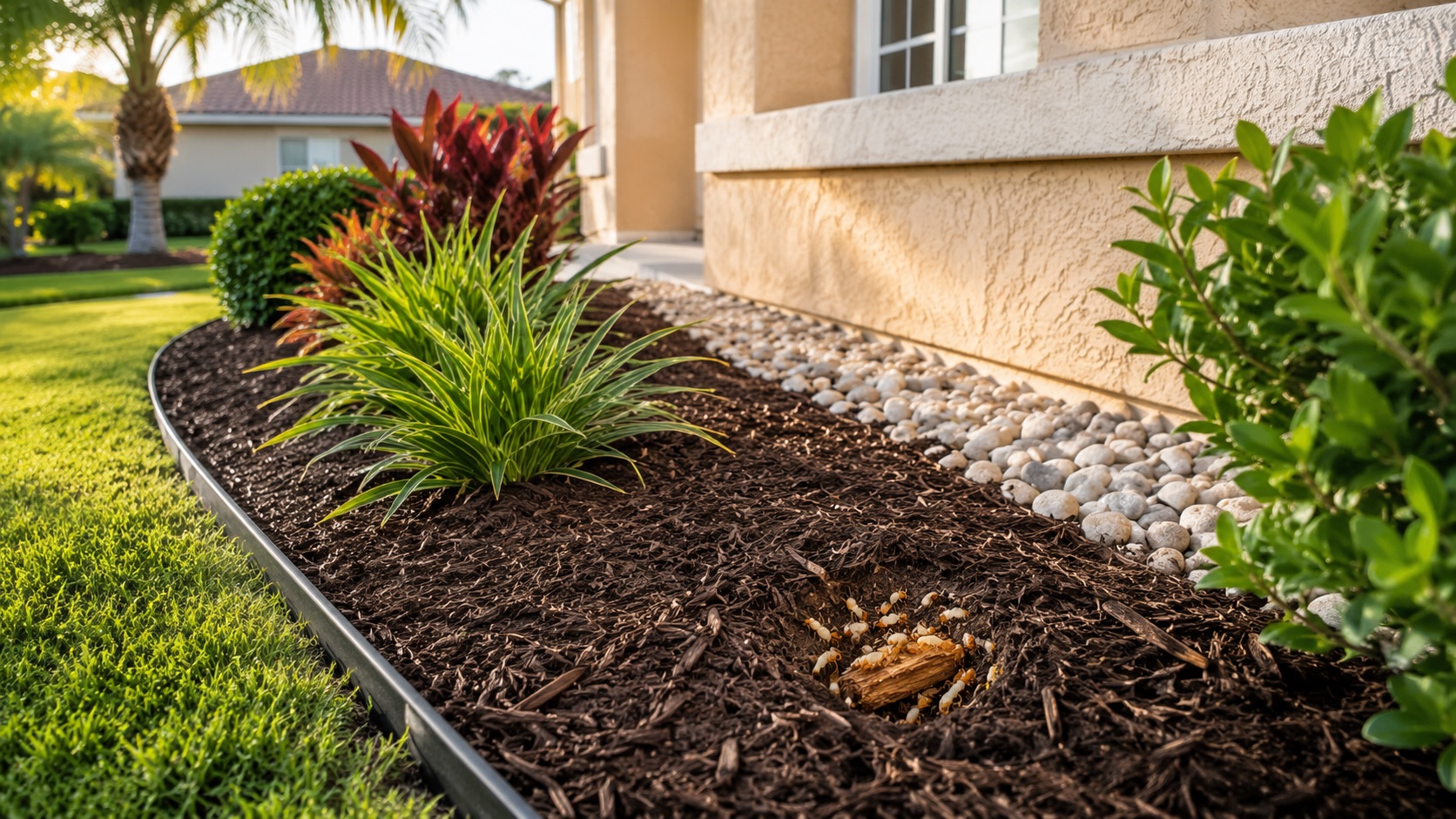
Mulch makes a yard look finished, protects soil, reduces weeds, and helps plants hold moisture during hot North County days. Still, one question comes up often: does mulch attract termites?
At North County Mulch, we understand why homeowners ask. Nobody wants to improve curb appeal while creating pest problems near the foundation. The good news is that mulch can be used safely around homes when it is installed with the right depth, spacing, drainage, and product choice.
The real issue is not that mulch magically brings termites into a yard. The bigger concern is that thick, wet mulch placed directly against a home can create the kind of hidden, damp pathway termites like. With smart application, homeowners across Escondido, San Diego, Carlsbad, Oceanside, Poway, Fallbrook, and nearby areas can enjoy beautiful mulch beds without inviting trouble.
Does Mulch Attract Termites?
Mulch does not usually introduce a new termite colony to your property. University of Florida IFAS notes that the larger risk comes from termites already established on a property, not from termites surviving in bagged or processed mulch. Their guidance also explains that mulch-fed termites have lower survivorship and that termites are more likely to benefit from damp, protected conditions near a structure.
That means the goal is not to fear mulch. The goal is to avoid creating moisture-heavy hiding zones against the home.
Termites are drawn to:
- Moist soil
- Hidden access points
- Wood-to-ground contact
- Poor drainage
- Thick mulch layers
- Covered foundation edges
- Cracks, gaps, and uninspected areas
Mulch is valuable for plants because it holds moisture. That same benefit can become a problem only when mulch is piled too deep, kept constantly wet, or pushed directly against siding, stucco, or foundation walls.
The Biggest Mistake: Mulch Against the Foundation
The most common mulch pest problem starts with over-application. A thick layer looks lush at first, but it can trap moisture, hide mud tubes, and make inspections harder.
NC State Extension warns that mulch should not touch the foundation or lowest level of siding, because it can allow termites to invade unseen. They also recommend keeping siding at least 6 inches above grade so termite tubes and moisture problems are easier to spot.
For North County homes with stucco, slab foundations, raised beds, or tight side yards, that visible inspection space matters. A clean buffer around the home lets pest control professionals, homeowners, and landscapers see what is happening at ground level.
The 6-Inch Safety Buffer Rule
The easiest termite prevention landscaping rule is simple: keep mulch at least 6 inches away from the foundation, stucco, siding, and wood trim.
A bare dirt, gravel, decomposed granite, or stone strip works well in this zone. Kansas State Extension recommends keeping mulch at least 6 inches away from building foundations and using no more than a 2 to 3 inch mulch depth to reduce problems with insects and other organisms.
| Safe Mulch Rule | Best Practice | Why It Matters |
|---|---|---|
| Foundation spacing | Keep a 6-inch bare or gravel buffer | Makes termite tubes and moisture problems easier to see |
| Mulch depth | Apply 2 to 3 inches in most beds | Reduces excess moisture and pest shelter |
| Siding clearance | Never bury stucco, siding, vents, or trim | Prevents hidden access and moisture damage |
| Water control | Aim irrigation away from walls | Termites prefer consistently damp soil |
| Bed maintenance | Rake and refresh mulch as needed | Prevents compacted, soggy layers |
How to Apply Mulch Safely Near a House
Safe mulch installation is not complicated. It just needs a clean edge and the right depth.
Use this foundation-safe method:
- Clear weeds, old debris, and wood scraps from the bed.
- Pull soil and mulch away from the foundation line.
- Create a 6-inch inspection strip beside the home.
- Use gravel or granite in the buffer zone for a clean, low-maintenance edge.
- Apply mulch 2 to 3 inches deep in plant beds.
- Keep mulch a few inches away from plant stems and tree trunks.
- Keep sprinklers and drip lines from soaking the foundation.
- Inspect the edge of the home during seasonal yard cleanups.
Need help estimating material? Use the North County Mulch Volume Calculator before ordering so the bed gets the right coverage without overloading the foundation area.
Pest Resistant Mulch: Does Material Choice Matter?
Material choice can help, but no mulch should be treated as a complete termite barrier. The best protection still comes from spacing, moisture control, and proper depth.
That said, certain wood types are often preferred by homeowners who want a cleaner, more pest-conscious landscape. North County Mulch offers mulch options made from redwood or cedar bark, including Gorilla Hair Mulch, which is known for its fibrous texture, moisture retention, weed suppression, and erosion control.
For homeowners comparing pest resistant mulch options, consider:
- Cedar-based mulch: Often selected for natural aromatic properties and landscape durability.
- Redwood bark mulch: Popular for clean color, long-lasting appearance, and slope performance.
- Gorilla Hair Mulch: A strong fit for slopes, pathways, and areas where erosion control matters.
- Shredded mulch: Useful for garden beds, weed suppression, and soil improvement.
- Gravel or granite: A smart option directly against foundations where a non-organic buffer is preferred.
North County Mulch also offers Shredded Mulch for garden beds and pathways. The product page notes that shredded mulch helps retain soil moisture, regulate soil temperature, suppress weeds, improve soil health, and control erosion.
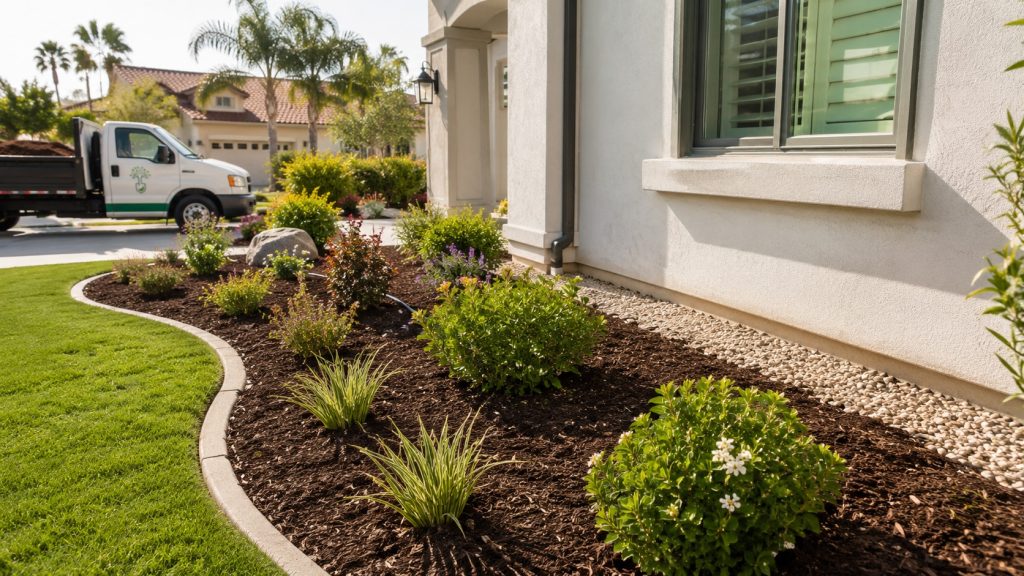
Termite Prevention Landscaping for San Diego County Homes
Southern California yards often rely on mulch to conserve water, protect plant roots, and keep beds looking clean during dry months. That makes proper placement even more important.
A termite-smart landscape should include:
- Downspouts and drainage that move water away from the home
- Irrigation aimed at plants, not stucco or foundation walls
- Mulch kept away from siding and wood trim
- Gravel or bare soil inspection strips around the structure
- No stacked lumber, firewood, or wood debris against the house
- Shrubs trimmed away from walls and vents
- Routine checks for mud tubes, damp spots, and wood damage
The University of Kentucky notes that homeowners can reduce termite risk by eliminating wood-to-soil contact and preventing moisture from accumulating near the foundation through proper gutters, downspouts, grading, and drainage.
Best Mulch Placement by Yard Area
Front Yard Garden Beds
Use mulch to frame shrubs, trees, and flowers, but keep the foundation strip clean. A border of gravel between the bed and home gives the yard a polished look while preserving visibility.
Sloped Areas
Gorilla Hair Mulch is a strong choice for slopes because its fibrous texture helps it knit together and resist erosion. Keep it away from the house edge and use stone near walls or drainage paths.
Walkways and Side Yards
For narrow side yards, avoid deep mulch piled between the fence and wall. Use a thinner layer, maintain airflow, and choose gravel near the foundation where inspection access matters most.
Trees and Shrubs
Keep mulch away from trunks and stems. Mulch volcanoes trap moisture against bark and can stress plants. A flat 2 to 3 inch layer, pulled back from the trunk, protects roots without creating rot issues.
Bulk Mulch Without the Pest Worry
The best way to order bulk mulch with confidence is to plan the layout before delivery. Measure the bed, decide where the foundation buffer will go, and calculate only the amount needed for proper depth.
North County Mulch provides landscape material delivery for residential and commercial projects, making it easier to get the right mulch, bark, gravel, granite, soil, or ground cover delivered to the project site. The company also offers convenient online ordering and delivery placement options for local customers.
For a pest-conscious landscape order, a smart combination may include:
- Mulch for plant beds
- Gravel or granite for the 6-inch foundation buffer
- Shredded mulch for pathways and garden areas
- Gorilla Hair Mulch for slopes and erosion-prone spaces
- Compost or topsoil for planting areas away from the structure
The Yard Can Look Great and Stay Protected
A beautiful mulch bed should not feel risky. When mulch is installed correctly, it supports plant health, improves curb appeal, reduces weeds, and helps conserve water without creating hidden pest pathways.
The key is control. Keep mulch shallow. Keep it off the foundation. Keep the home’s edge visible. Keep water moving away from the structure. Choose the right material for each part of the yard.
At North County Mulch, we help homeowners and landscapers across Escondido and San Diego County get the right materials for better-looking, safer landscapes.
FAQs
Does mulch attract termites?
Mulch does not usually bring termites into a yard, but thick, wet mulch placed against a foundation can create conditions termites like. The safest approach is to keep mulch shallow, dry near the home, and pulled back from siding, stucco, and foundation walls.
How far should mulch be from the foundation?
Keep mulch at least 6 inches away from the foundation, stucco, siding, and wood trim. This creates an inspection space and reduces hidden moisture near the home.
What is the safest mulch depth near a house?
A 2 to 3 inch mulch layer is usually best for landscape beds. Avoid piling mulch 4 inches or deeper near the home because thick mulch can hold too much moisture and hide pest activity.
Is cedar mulch pest resistant?
Cedar-based mulch is often chosen for its natural aromatic properties and durability. It can be a helpful material choice, but spacing, drainage, and proper application matter more than the mulch type alone.
Should gravel be used near the foundation?
Gravel or granite can be a smart choice in the buffer zone next to the home. It keeps the foundation edge visible and creates a clean separation between organic mulch beds and the structure.
Where can homeowners order bulk mulch in Escondido or San Diego County?
Homeowners can order bulk mulch, Gorilla Hair Mulch, shredded mulch, gravel, granite, and other landscape supplies from North County Mulch in Escondido, with pickup and delivery options for San Diego County projects.